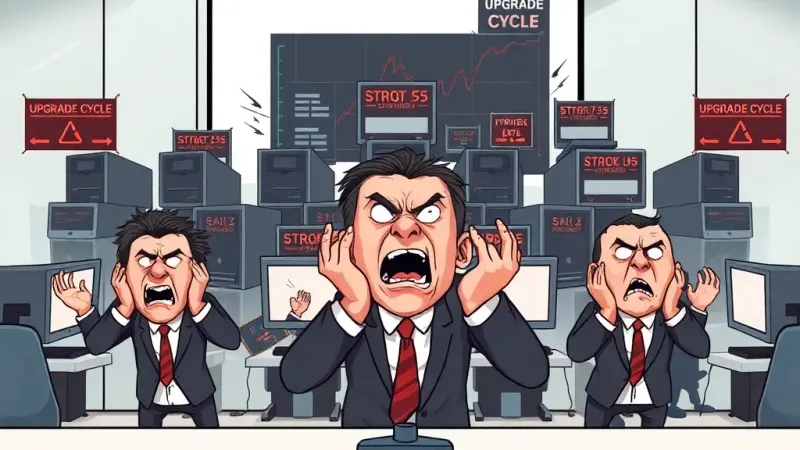
WASHINGTON D.C. — A new report from the Institute for Perpetual Consumption (IPC) indicates a troubling trend for the global technology sector: an increasing number of consumers are successfully extending the lifespan of their electronic devices, thereby circumventing mandatory upgrade cycles. This “insidious defiance of obsolescence,” as one analyst termed it, threatens to disrupt the established economic model of continuous hardware replacement.
The findings highlight a growing user base, particularly in the PC market, that is actively seeking alternatives to purchasing new equipment. The report specifically cites the recent end-of-life support for Windows 10, intended to catalyze a mass migration to Windows 11-compatible hardware, as a pivotal moment. Instead, a segment of users, faced with perfectly functional computers deemed “obsolete” by software vendors, are opting for open-source operating systems like Linux, effectively neutralizing a key driver of new sales.
“We’re observing a phenomenon where devices, despite being intentionally deprecated by software updates and hardware incompatibility mandates, continue to perform their primary functions,” stated Dr. Eleanor Vance, Chief Obsolescence Strategist at TechFutures Global, a consulting firm specializing in planned consumption. “This unexpected resilience in aging processors and perfectly adequate RAM configurations represents a significant leak in the revenue pipeline. Every day a nine-year-old ThinkPad runs a word processor without generating new hardware sales is a day our 2 stagnates.”
The IPC report projects a potential 3.7% decrease in Q4 2025 global hardware shipments if this trend persists, translating to an estimated $12-15 billion in lost revenue for manufacturers and retailers. Experts are grappling with the moral and ethical implications of widespread device functionality. “Our entire system is predicated on the graceful, profitable failure of technology,” explained Professor Kenneth Dillard, Chair of Sustainable Unsustainability Studies at the University of Phoenix Online’s Division of Corporate Ethics. “When consumers discover their devices are perfectly capable of another five to seven years of service, it undermines the fundamental premise of technological progress, which is, of course, increased quarterly profits.”
Companies are reportedly exploring various countermeasures, including the development of new, more aggressive obsolescence strategies that are harder to bypass with open-source alternatives. One proposal involves self-destructing motherboards upon software end-of-life. “The goal,” Dr. Vance concluded, “is to make it economically, psychologically, and physically impossible for a device to continue functioning past its predetermined revenue-generating window.”
In related news, a study found that the sun will, in fact, continue to rise tomorrow, further complicating projections for a timely global reboot.