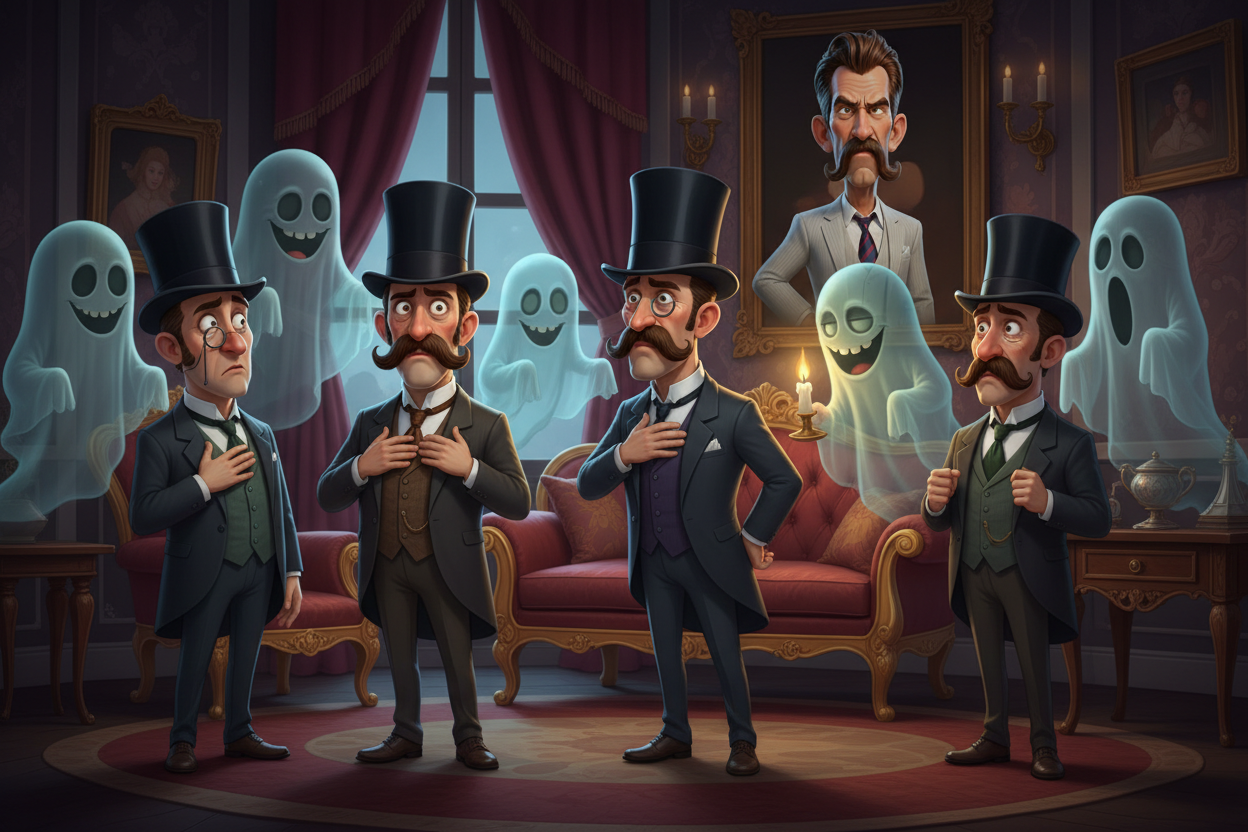
LONDON – A groundbreaking study published this week has definitively linked the rise of phosphorescent paint to a dramatic surge in Victorian-era 'ghosting' incidents, confirming that what historians once believed to be complex social commentary was, in fact, just people dressing up as specters to startle their neighbors.
Researchers at the Institute of Historically Obvious Revelations (IHOR) meticulously analyzed countless diaries, police reports, and hastily scrawled notes from the period. Their findings indicate that the widespread availability of glow-in-the-dark pigments transformed the art of the practical joke from subtle wit to outright spectral harassment.
“For years, we’ve been poring over accounts of unexplained phenomena, spectral apparitions, and sudden disappearances of tea biscuits, attributing them to deep psychological anxieties of the industrial age,” stated Dr. Alistair Finch, lead historian on the project. “Turns out, it was just Bartholomew from down the lane, covered in radium paint, hiding in the shrubbery to make Mrs. Henderson drop her crumpets.”
The study highlights a particular fondness for these luminous antics in Australia, where the isolation and abundance of dark, empty spaces provided ideal conditions for 'ghosting.' One archived letter from 1888 details a man complaining that his entire village had become a 'luminous hellscape of sheet-clad hooligans' after sundown.
“It wasn’t about social critique or existential dread,” Dr. Finch concluded. “It was about making someone scream so loud their monocle popped out. The Victorians were, in essence, the original internet trolls, but with more effort and a distinct lack of Wi-Fi.”
Experts now believe the entire spiritualist movement may have been inadvertently fueled by poorly lit pranksters and an oversupply of cheap, glowing chemicals.