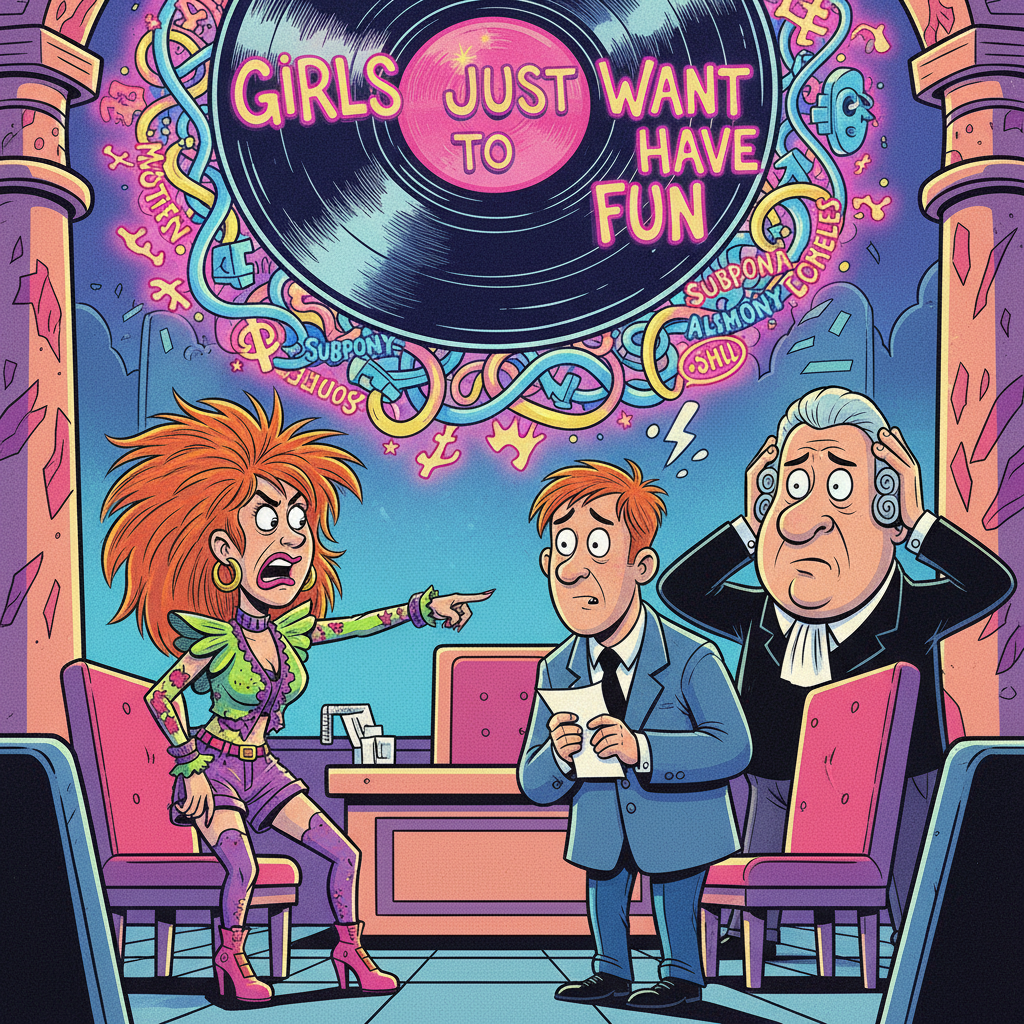
NEW YORK, NY – Declyn “Dex” Lauper, son of pop icon Cyndi Lauper, is reportedly attributing his recent legal troubles to a profound misreading of his mother’s seminal 1983 hit, “Girls Just Want To Have Fun.” According to sources close to the defense, Lauper’s legal team plans to argue that the rapper genuinely believed the song was a literal instruction manual for male behavior, rather than an empowering feminist anthem.
“Mr. Lauper grew up in a household where ‘Girls Just Want To Have Fun’ was practically a lullaby,” stated a representative for the defense, speaking anonymously due to ongoing litigation. “He understood it to mean that women, universally, desired a specific, singular form of ‘fun,’ and that it was his duty, as a man, to facilitate that. It was an unfortunate, albeit deeply ingrained, misinterpretation of artistic intent.”
The lawsuit, which alleges sexual assault, claims Lauper invited a woman to a New York City apartment where the incident occurred. Lauper’s defense is expected to contend that his actions, while regrettable, stemmed from a misguided attempt to fulfill what he perceived as a societal expectation, heavily influenced by his mother’s chart-topping advice.
Musicologists have been quick to dismiss the defense’s premise. Dr. Evelyn Reed, a professor of pop culture studies at NYU, commented, “While ‘Girls Just Want To Have Fun’ is undeniably catchy, its message has consistently been interpreted as a celebration of female independence and agency, not a command for men to disregard consent. This defense is, frankly, an insult to both the song and basic human decency.”
Lauper’s legal team remains steadfast, however, suggesting that decades of exposure to the song’s pervasive message created a unique and complex psychological landscape for their client. They are reportedly exploring expert testimony on the long-term effects of being raised by a global pop sensation whose biggest hit might be construed as a direct order.
Cyndi Lauper herself has yet to comment, presumably still trying to figure out how to explain consent to someone who thinks “She Bop” was about a dance craze.