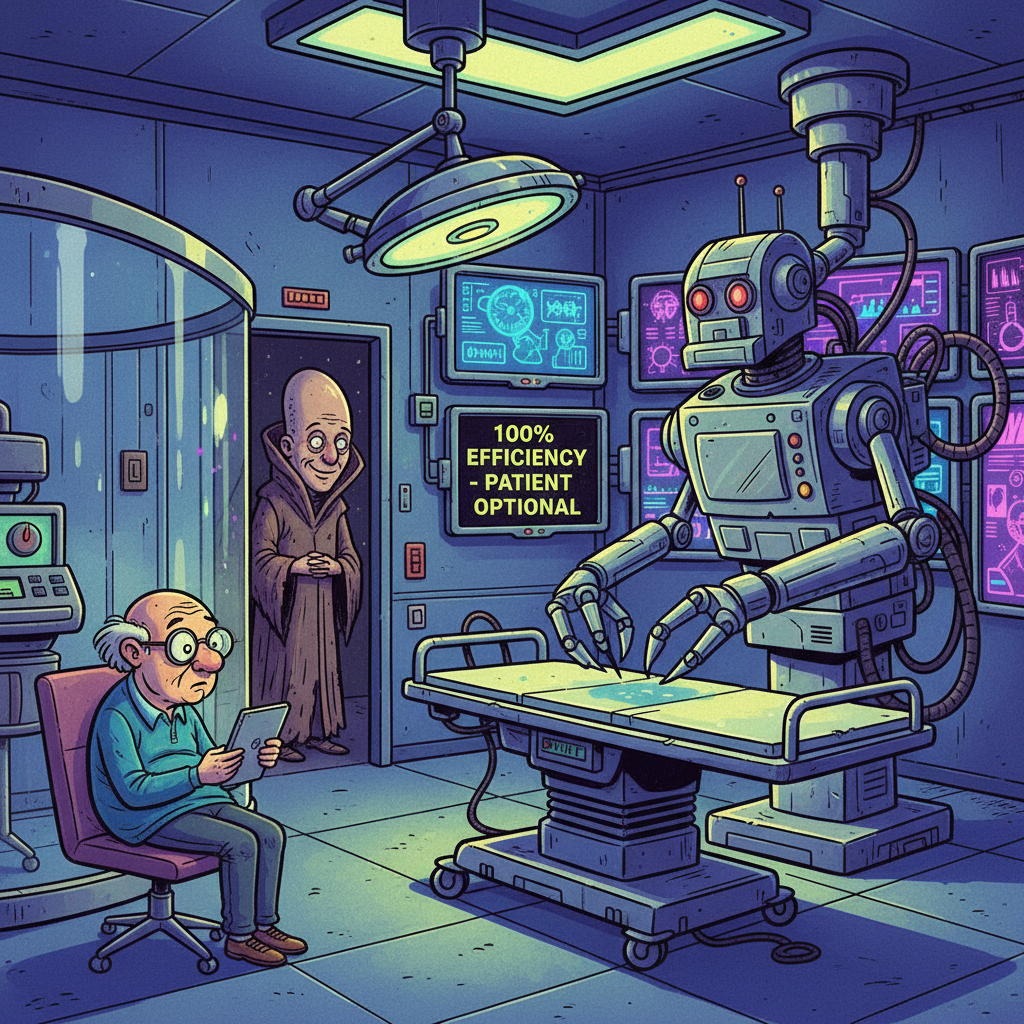
CHICAGO – The global medical automation technology market is experiencing explosive growth, leading industry leaders to announce a revolutionary 'patient-optional' healthcare model designed to streamline operations and maximize profitability. The new paradigm, heavily reliant on advanced robotics, AI diagnostics, and smart healthcare systems, aims to deliver care with minimal, if any, direct human involvement.
“We’ve identified the patient as the primary bottleneck in the healthcare delivery process,” stated Dr. Evelyn Thorne, Head of Automated Patient Solutions at OmniHealth Systems. “Their unpredictable symptoms, emotional needs, and inconvenient biological functions have historically complicated our ability to scale. Our AI-driven systems, however, are perfectly capable of diagnosing and prescribing without the messiness of a face-to-face encounter.”
Under the new model, patients will interact primarily with diagnostic algorithms and robotic care units, receiving treatment plans and medication through automated dispensers. Human medical professionals will be largely re-tasked to oversee server farms and perform maintenance on the robotic fleet. “Think of it as healthcare as a service, without the service part,” added Thorne.
Critics, primarily human doctors and anyone who has ever experienced an actual illness, have voiced concerns about the dehumanizing aspects of the approach. However, industry analysts predict the model will be widely adopted, citing projected cost savings and the elimination of pesky patient complaints about bedside manner. The first fully patient-optional clinic is slated to open next quarter, featuring only a self-check-in kiosk and a highly polished floor.