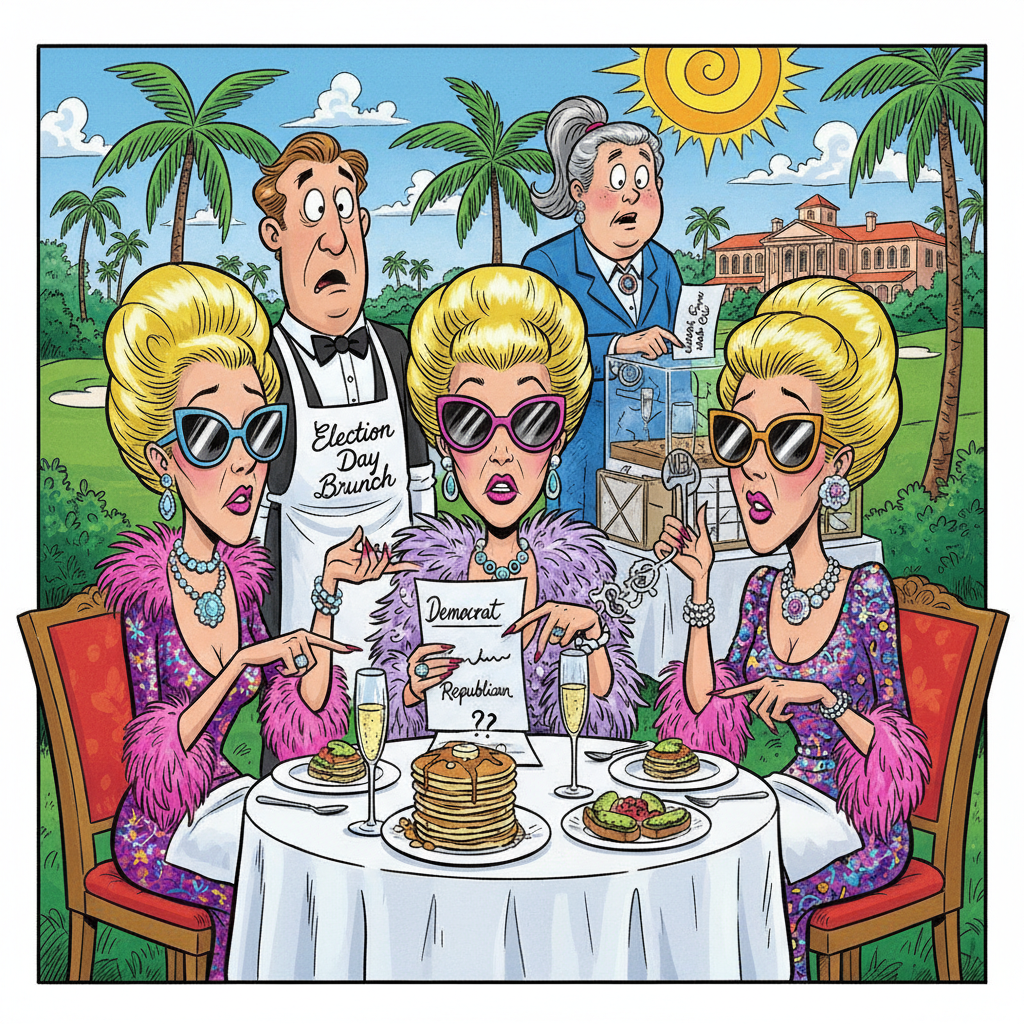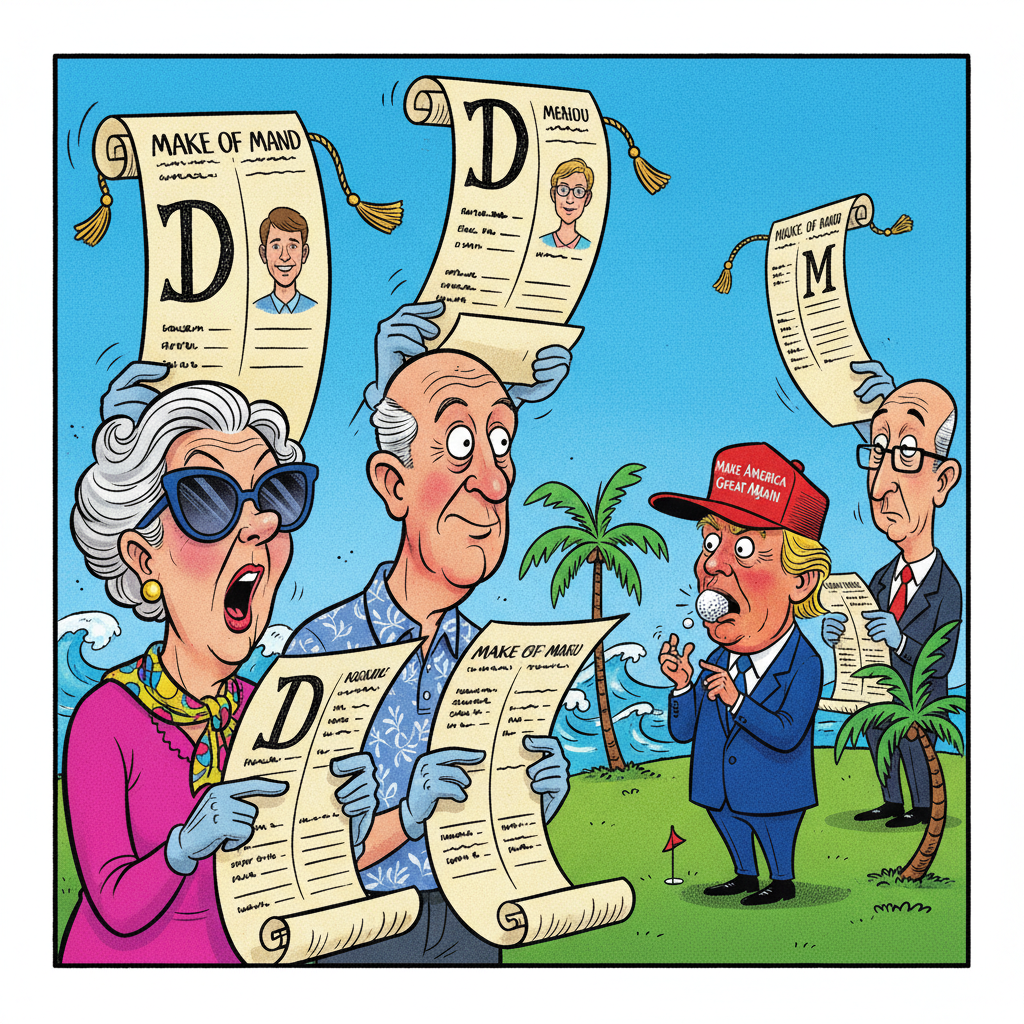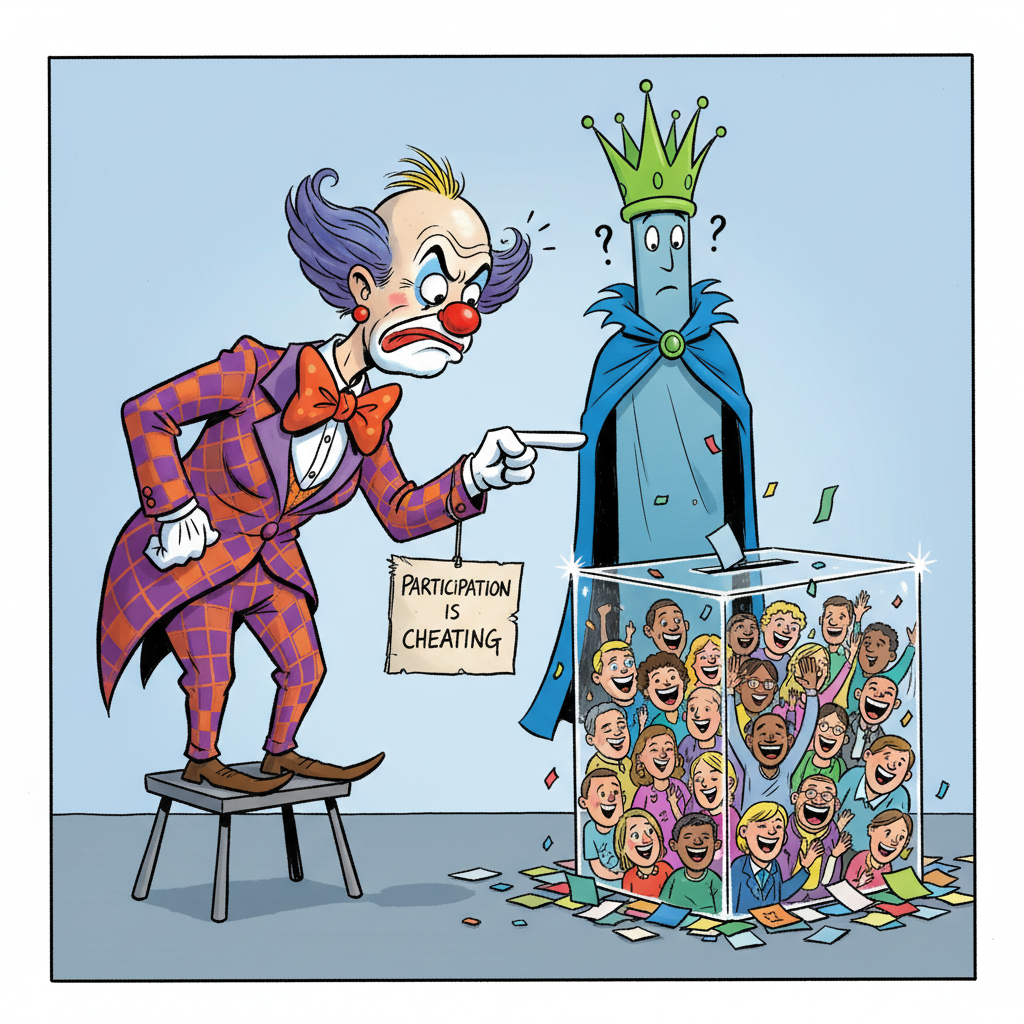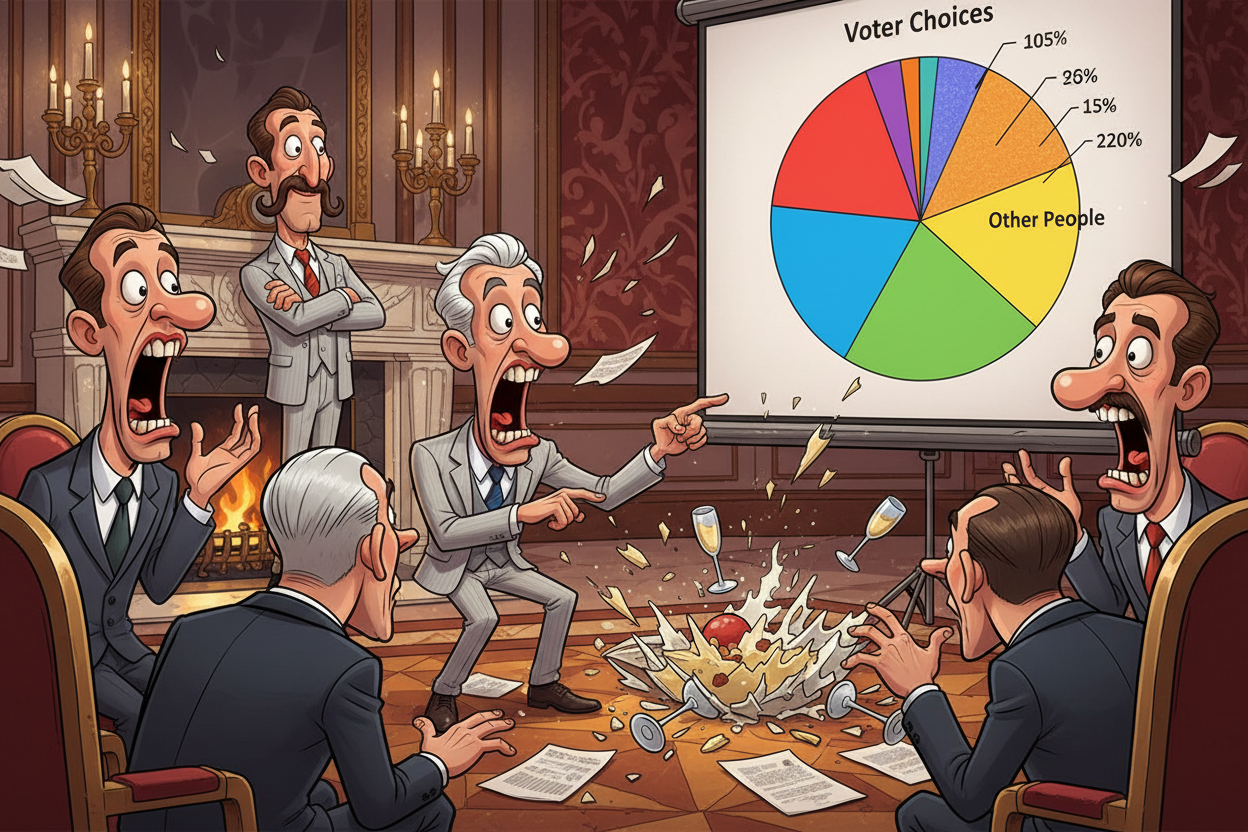
WASHINGTON D.C. – Republican strategists are reportedly reeling after a recent special election loss in a district encompassing former President Donald Trump’s Mar-a-Lago estate, a defeat that has forced a painful re-evaluation of fundamental political axioms. The stunning upset, which saw a Democratic candidate prevail in what was widely considered a safe Republican seat, has led to the unprecedented conclusion that voters might, on occasion, cast ballots for candidates other than those explicitly endorsed or implicitly associated with a singular political figure.
“For years, we’ve operated under the assumption that if you even *smelled* like Mar-a-Lago, victory was a foregone conclusion,” stated veteran GOP consultant Brenda Finch, wiping a tear from her eye. “This… this changes everything. It suggests that voters might actually look at the candidates, their platforms, or even, dare I say, their local issues.” Finch described the revelation as “a paradigm shift on par with discovering the Earth isn’t flat, but much, much more inconvenient.”
Internal memos, leaked to this publication, indicate a scramble within the party to understand this novel phenomenon. One memo, titled “Project: Independent Thought?” outlines a series of focus groups designed to determine if voters are “truly capable of autonomous decision-making” or if the recent outcome was merely “a statistical anomaly involving a rogue algorithm or perhaps a solar flare.”
Dr. Alistair Pumble, a political science professor at the University of Southern Florida who specializes in “the obvious,” commented, “It’s a common misconception in modern politics that a party’s base is a monolithic entity. Sometimes, people just want the potholes fixed, or they don’t like the guy who keeps yelling at the town hall. It’s not rocket science, but apparently, it’s harder than building a rocket for some.”
The GOP now faces the daunting task of developing campaign strategies that account for the possibility of voters exercising individual choice, a concept many strategists admit they had previously considered purely theoretical.