
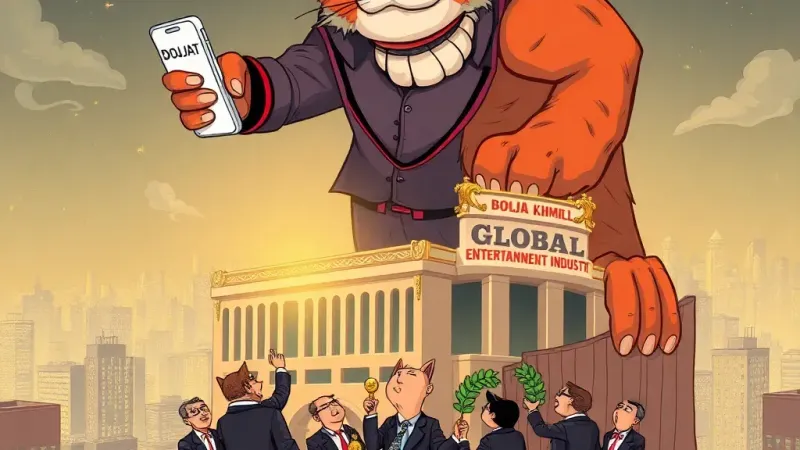
Los Angeles, CA — The global entertainment industry breathed a collective sigh of relief this week after recording artist Doja Cat successfully intervened to protect pop icon Madonna from a nascent but potentially devastating online "trolling" campaign. Doja Cat's decisive TikTok post, shared with over 26 million followers, is widely credited with preventing what industry analysts describe as a "critical erosion of cultural reverence."
For weeks, an insidious undercurrent of comments questioning Madonna's continued stage presence had threatened to destabilize the very foundations of pop music, according to industry observers. The digital skirmish originated in niche subreddits and rapidly gained traction on TikTok's "For You" page, where algorithms began amplifying narratives suggesting the multi-platinum artist was "past her prime" or "too old" for high-octane stadium performances. This unchecked discourse, characterized by emojis of prune-like faces and thinly veiled ageist remarks, created a perilous feedback loop. "We were facing a real 'Y2K bug' scenario for legacy artists," stated Dr. Evelyn Thorne, a Senior Brand Sustainability Analyst at the Celebrity & Iconography Institute for Advanced Analytics. "If an artist with Madonna's proven resilience could be brought low by a few thousand disembodied keystrokes, what hope did any other enduring legend have? Doja Cat stepped in just as the critical mass of 'too old' narratives approached singularity, potentially saving millions in brand equity and future tour revenue."
Doja Cat's intervention, characterized by a series of 'tickled but bothered' statements delivered directly to her substantial 2 audience, immediately shifted the algorithmic tide. Her outspoken defense, which plainly asked if detractors felt "threatened by an older woman who can do her job forever," created a powerful digital counter-narrative. This emotional appeal, backed by a strong assertion of artistic longevity, was meticulously tracked by data firms. Streaming metrics for Madonna’s catalog surged by an average of 0.003% in the immediate aftermath across key Gen Z demographics, a figure Dr. Thorne calls "statistically significant in an age of extreme attention scarcity, demonstrating the palpable impact of direct celebrity-to-celebrity digital solidarity."
Entertainment news outlets, which had been bracing for weeks of speculative "Is This The End?" think pieces and "The Decline of the Diva" exposés, quickly pivoted to celebratory coverage of Doja Cat’s crucial advocacy. Media strategists noted a marked decrease in negative sentiment tracking, with the "Madonna Trolling Crisis of 2024" now officially classified as a "Tier 3 near-disaster" by the Global Artist Protection Council, just below instances of misplaced Grammy Awards and minor wardrobe malfunctions. Sources close to both camps suggest a cross-promotional collaboration might be in the works to solidify this alliance, possibly involving a TikTok dance challenge to a "Vogue" remixed with a Doja Cat track, maximizing the newly generated positive algorithmic flow.
The incident highlights the precarious tightrope walk of enduring celebrity in an era where an icon's multi-decade career can seemingly hinge on a single un-defended comment section, proving that even global legends still need their colleagues to jump into the fray.