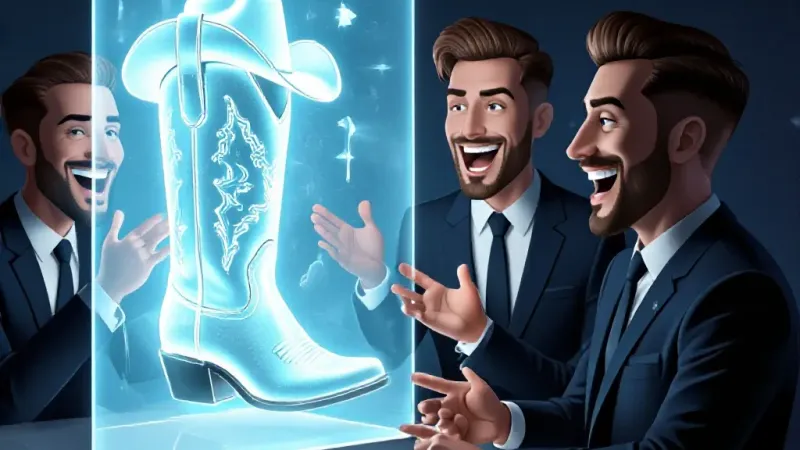
Country radio stations nationwide are experiencing a collective epiphany, frantically adding Taylor Swift’s latest track, "I Knew It, I Knew You," to their rotations. This sudden, profound re-discovery of her "country roots" has coincided perfectly with her ongoing, unprecedented global financial dominance, leading industry experts to declare this the most authentic and organic artistic return ever orchestrated by a multi-billion-dollar corporate machine.
"We've always kept a close eye on Taylor, even when her stadium tours grossed more than the GDPs of small nations and her pop anthems dominated every metric known to humanity," stated Buck Sterling, head of A&R at Big Hat Media Group. "It just took the right song – and by 'right song,' I mean a track with the gravitational pull of a black hole on Spotify streams and the ability to trigger a direct-deposit notification in our CFO's phone – for us to remember her profound artistic connection to, you know, trucks and dirt roads." Sterling added that the station had previously "misplaced" all data pertaining to Swift's early career, but it was "miraculously found" just last week, sandwiched between a tax audit and a memo about dwindling ad revenue.
This sudden genre amnesia has swept through Nashville's airwaves with the force of a private jet landing on a pickup truck. Internal market analytics, reportedly sourced from an "Institute for Aspirational Proximity Studies," revealed that Swift’s music, regardless of its previous classification as "pop" or "global phenomenon," consistently delivers engagement metrics that could bail out a medium-sized European economy. A leaked memo from one major syndicate, simply titled "Project Golden Goose," detailed a proprietary algorithm demonstrating that playing any Swift song increases advertiser interest by 300% and reduces listener churn by an amount equivalent to the current national debt, all while maintaining a 'heartfelt' aesthetic.
Some skeptical listeners noted that "I Knew It, I Knew You" contains zero banjos, fiddles, or references to anything more rural than a suburban cul-de-sac, leaning heavily into a synth-driven, anthemic pop sound. However, industry analysts quickly dismissed these observations as "misguided genre puritanism." One analyst, Dr. Penny Loafer from the afore-mentioned Institute, explained, "Authenticity in country music today isn't about instruments or lyrics; it's about the undeniable, crushing force of market demand. If 1.2 billion first-day streams aren't 'deeply soulful' and 'authentically American,' then frankly, nothing is."
As stations prepare to roll out "Taylor Swift Country Takeover Week," executives are already brainstorming how to reclassify Beyoncé's entire discography as "Bluegrass Fusion" once her next album nets sufficient billions. After all, what's more country than a guaranteed, massive return on investment?