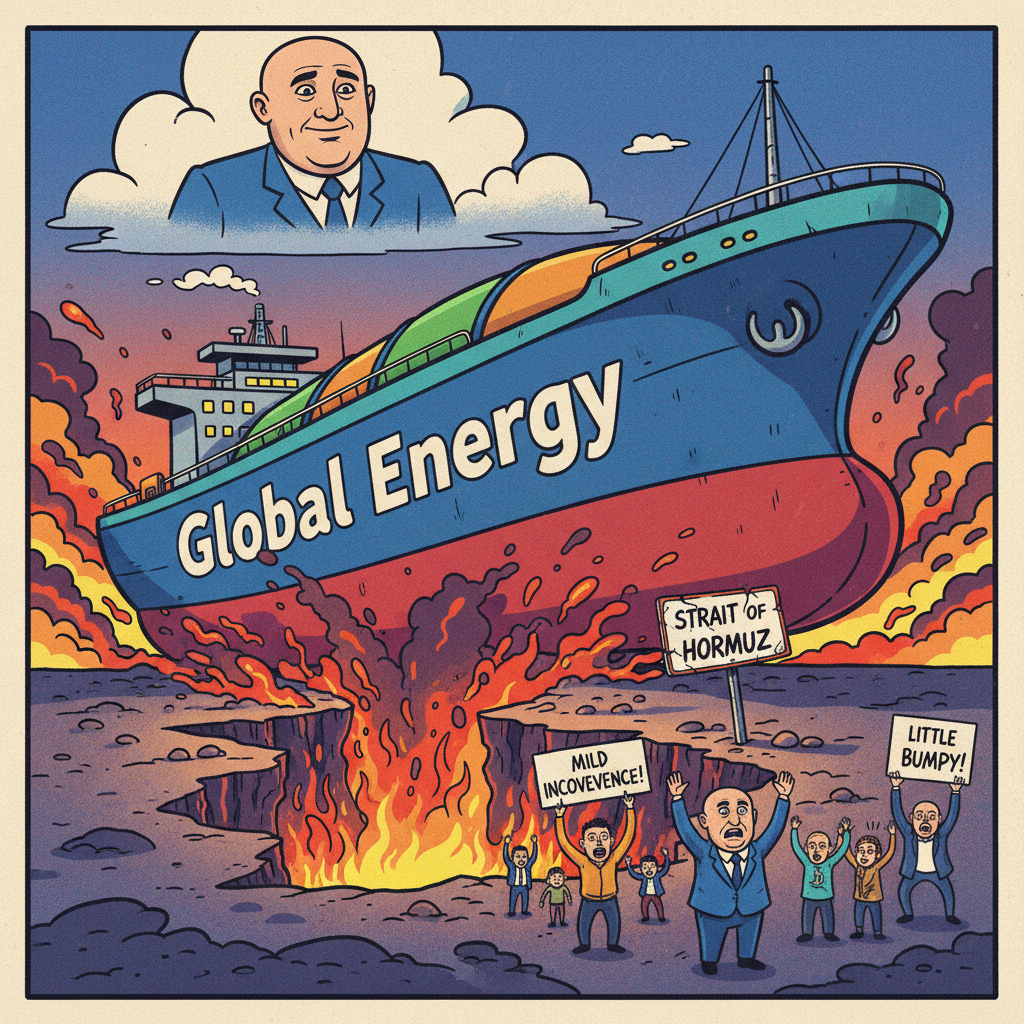
DUBAI – Global energy markets are reportedly preparing for what analysts are calling a “mild inconvenience” should the Strait of Hormuz, a critical chokepoint for international trade, face a prolonged closure. While previous concerns focused on crude oil, new data suggests liquefied natural gas (LNG) flows could experience a “marginally more significant disruption,” prompting calls for measured, yet ultimately futile, contingency planning.
“We’re not saying it’s good, but it’s certainly not, like, *bad* bad,” stated Dr. Evelyn Reed, a Senior Fellow at the Institute for Unforeseen Energy Scenarios, from her yacht currently navigating the Mediterranean. “Think of it less as a crisis and more as a really annoying pop-up ad you can’t quite close. For LNG, it might be two pop-ups.”
Industry insiders confirmed that while oil tankers have long been the poster children for Hormuz-related anxieties, the sheer volume of LNG passing through means a closure could lead to a “brief period of slightly elevated prices” and “some awkward conversations about winter heating bills.” One anonymous executive from a major energy firm admitted, “We’ve already budgeted for a new fleet of slightly longer extension cords.”
Meanwhile, consumers are advised to continue their normal routines, perhaps considering a second, slightly smaller, emergency generator for their backup generator.