BRUSSELS – The Group of Seven (G7) nations today unveiled a groundbreaking strategy to tackle the spiraling global oil crisis: a series of interventions meticulously crafted to slow, but not entirely halt, the impending economic downturn. Experts laud the move as a testament to international cooperation, particularly in ensuring that the worst of it happens on someone else’s watch.
“We are committed to taking decisive, yet ultimately temporary, action,” stated a spokesperson for the G7, speaking anonymously from a secure, undisclosed location with excellent air conditioning. “Our goal is to manage expectations and ensure that the public understands that while we are doing *something*, it’s not necessarily going to *fix* anything permanently. Think of it as hitting the snooze button on the apocalypse.”
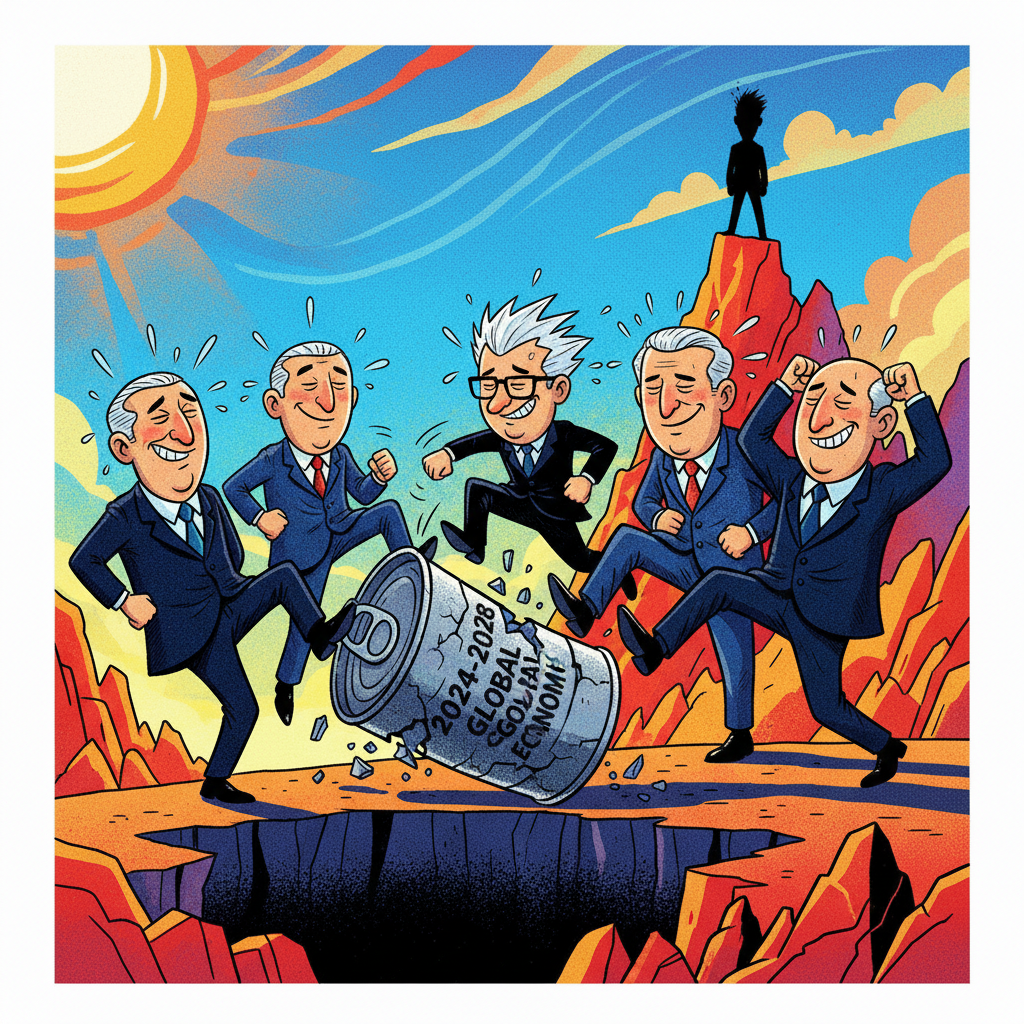
The plan reportedly involves a complex series of financial maneuvers, strategic press releases, and a collective agreement to look very concerned during photo opportunities. Analysts suggest the measures could buy the global economy anywhere from six weeks to two months of relative stability before the underlying issues reassert themselves with renewed vigor.
“It’s a masterclass in political theater,” remarked Dr. Evelyn Reed, a professor of performative economics at the University of Central Punditry. “They’re not trying to stop the train; they’re just trying to make sure it doesn’t derail until after the next election cycle. It’s a classic move: delay, deflect, and then blame the next guy.”
Citizens are advised to enjoy the brief respite, perhaps by investing in canned goods or learning a marketable skill like artisanal candle making, before the inevitable. The G7 assures the public they are working tirelessly to ensure the future remains someone else's problem.