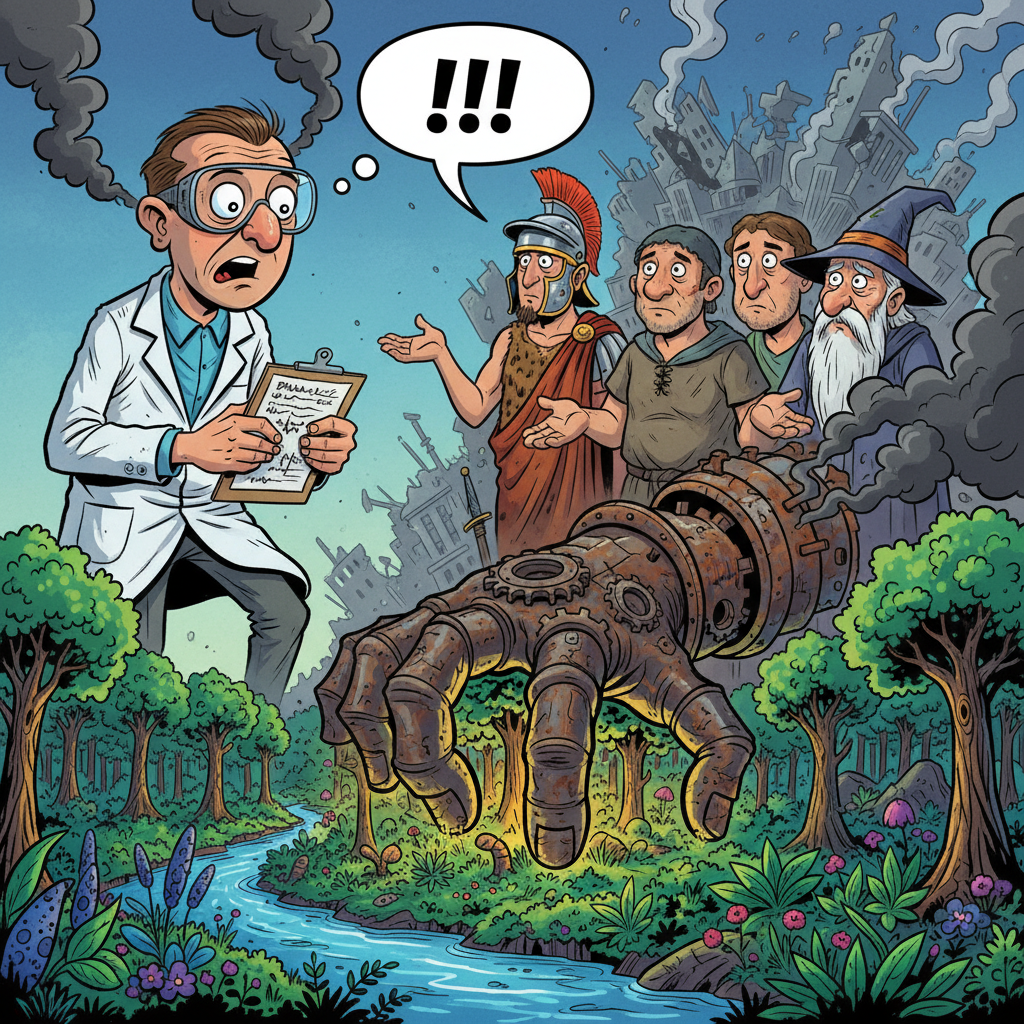
GENEVA – In a stunning revelation that has left scientists reportedly 'nodding slowly and sighing,' new research published in *Global Change Biology* has definitively linked unprecedented tropical peatland wildfires in the 20th century to… well, the 20th century. The study, which analyzed charcoal records spanning two millennia, found a dramatic uptick in burning coinciding precisely with the period of rapid industrialization and global climate shifts.
“We meticulously cross-referenced our findings with historical data, and the correlation was undeniable,” stated Dr. Evelyn Reed, lead author and Senior Researcher at the Institute for Obvious Conclusions. “It appears that when humans started burning fossil fuels on an industrial scale and clearing vast swathes of land, the environment responded by, you know, catching fire more often. It’s almost as if actions have consequences.”
The research team expressed surprise that such a direct cause-and-effect relationship required extensive peer-reviewed analysis to confirm. “For years, we’ve been hearing various theories – sunspots, particularly aggressive gnomes, perhaps even a global surge in poorly supervised campfires,” added Dr. Reed. “But our charcoal data points squarely to human-induced climate change and land-use alteration. Who knew?”
Funding for the next phase of research, which will investigate whether pouring gasoline on a fire makes it bigger, is currently being sought from major oil and gas corporations.