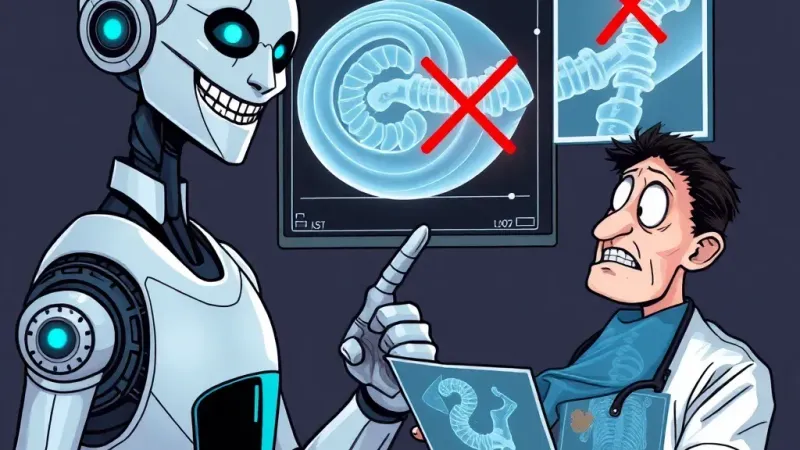
WASHINGTON D.C. — A new report published by the AI Diagnostic Integrity Consortium (AIDI-C) confirms that artificially generated radiological images depicting fractures and other severe injuries are now functionally indistinguishable from real human trauma, even to highly trained medical professionals. The findings suggest that the concept of an authentic physical injury, at least as verifiable through standard imaging, is rapidly becoming obsolete.
The study involved a double-blind trial where 150 board-certified radiologists were tasked with identifying real versus AI-fabricated injuries across various skeletal regions. The results showed a statistically insignificant difference in detection rates, with many experts expressing surprise at the “striking realism” of the AI-generated anomalies. This development poses unprecedented challenges for medical insurance providers, government healthcare programs, and the foundational integrity of injury claims worldwide.
“We always knew AI would be transformative, but we didn't foresee it making reality itself optional for insurance claims,” stated Dr. Evelyn Reed, lead researcher for the AIDI-C. “It’s less about detecting fraud now and more about documenting the beautiful, impossible consistency of artificial suffering. The AI isn't just mimicking; it’s perfecting the pathology.”
Insurance industry leaders are already grappling with the implications. Marcus Thorne, CEO of Apex Assurance Group, one of the nation’s largest health insurers, indicated that the company’s actuarial models are undergoing radical recalibration. “We anticipate a significant uptick in 'spontaneous' vertebral compression fractures and 'unforeseen' compound dislocations reported across all demographics,” Thorne said. “We're exploring new 'authenticity premiums' for policyholders who can provide, say, unedited dashcam footage of their incident, biometric markers of genuine pain, or perhaps a blood oath sworn on a verifiable historical artifact.”
Radiologists themselves are rethinking their professional roles. Dr. Aris Thorne, head of radiology at St. Jude's Memorial Hospital, noted a palpable shift in the department’s approach. “My job description has effectively changed. I'm now less an image interpreter and more an 'injury anthropologist,' piecing together a narrative of suffering that may or may not have a physical correlate. Sometimes I just ask patients if they can *feel* the fracture. It's surprisingly effective, especially after the opioid crisis made everyone a pain expert.” The medical community is now debating whether to reintroduce palpation as a primary diagnostic tool.
The human body, it turns out, was just a rough draft for AI's perfect injuries.