Nairobi, Kenya – A groundbreaking study published in *Royal Society Open 2* has uncovered a concerning shift in the gut microbiomes of African elephants in protected Kenyan reserves, indicating that the majestic animals are rapidly evolving digestive systems more attuned to the processed, anti-inflammatory, and often bland dietary preferences of human influencers. The research, a collaboration between the San Diego Zoo Wildlife Alliance and Save the Elephants, suggests that increased cohabitation with livestock is inadvertently cultivating an elephant gut optimized for "beige diets" and "gentle digestion" rather than the diverse plant matter traditionally consumed by the pachyderms.
Researchers tracked individual elephants in Samburu and Buffalo Springs National Reserves, noting a significant proliferation of gut bacteria species typically associated with low-fiber, high-fat human diets and a corresponding decline in robust fermentation capabilities. "We're seeing a stark increase in strains linked to gluten sensitivity, lactose intolerance, and even a nascent craving for Oatly-brand oat milk," explained Dr. Evelyn Finch, lead microbiologist at the Institute for Interspecies Wellness. "Their guts are less about breaking down tough acacia leaves and more about minimizing bloat after a restrictive smoothie bowl. It's almost as if they're subconsciously preparing for a career in sponsored content, perhaps promoting a new line of 'mindful eating' apps for the savannah."
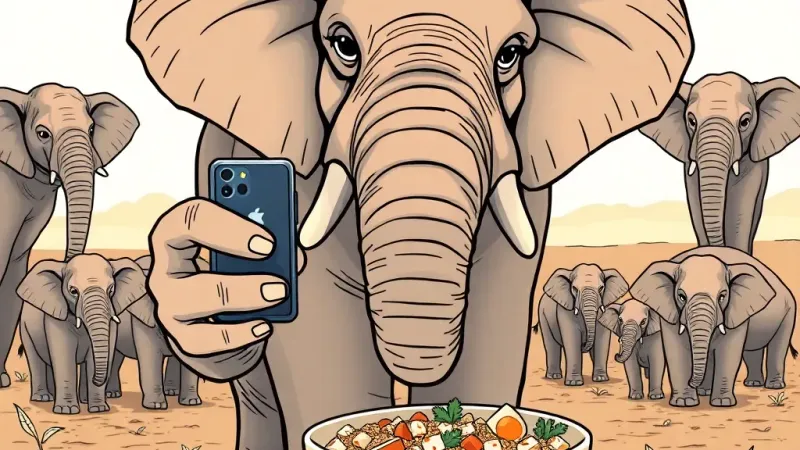
The shift, while not immediately life-threatening, raises concerns among conservationists about the long-term health implications. Elephants are now reportedly experiencing occasional "digestive resets" and showing increased interest in fermented roots and probiotic mud baths, mirroring popular human wellness 2 like colonics and intermittent fasting. Furthermore, early behavioral observations suggest some younger elephants are starting to pose near watering holes with a detached, thoughtful gaze, often at an angle that accentuates their tusks, meticulously framing themselves against the setting sun – leading to widespread speculation about burgeoning personal brand awareness and potential affiliate marketing partnerships for luxury safari experiences.
"It's a classic case of what we call 'anthropogenic microbial drift'," Dr. Finch continued, adjusting her own artisanal kombucha. "As livestock graze, they introduce human-associated microbes and agricultural residues, like microplastics from discarded feed bags and the residual emotional stress of over-scheduled ranch owners, into the elephant ecosystem. The elephants, in their innate wisdom, are simply adapting to the prevailing biome. Soon, we anticipate finding entire herds capable of metabolizing high-fructose corn syrup, discerning the subtle differences between various adaptogenic mushroom powders, and expressing a preference for ethically sourced, single-origin water."
Conservation groups are now exploring introducing "wild-strain" probiotics to the elephant diet, potentially delivered via drone-mounted sprayers directly into their mouths during carefully choreographed sunrise yoga sessions, to help the animals reconnect with their ancestral digestive heritage before they demand ergonomic standing desks, noise-canceling headphones, and a monthly subscription to a spiritual wellness app focused on 'inner peace through controlled grazing.'