DALLAS, TX — Faced with unprecedented overcrowding, Dallas Animal Services (DAS) has announced a groundbreaking new initiative urging its canine residents to take personal responsibility for their emotional well-being and actively participate in their own rehoming efforts. The program, dubbed "Project Wag-Wellness," aims to empower animals to "self-manage" stress and alleviate the severe strain on the city’s overwhelmed shelters.
"We've reached a point where traditional methods are simply unsustainable," stated Dr. Amelia Vance, DAS Director of Canine Psychological Resiliency. "Our new approach focuses on internal fortitude. We're providing tools for our dogs to process their anxieties independently and become proactive partners in their own adoption journey. Think of it as a shift from reactive containment to proactive paw-ticipation."
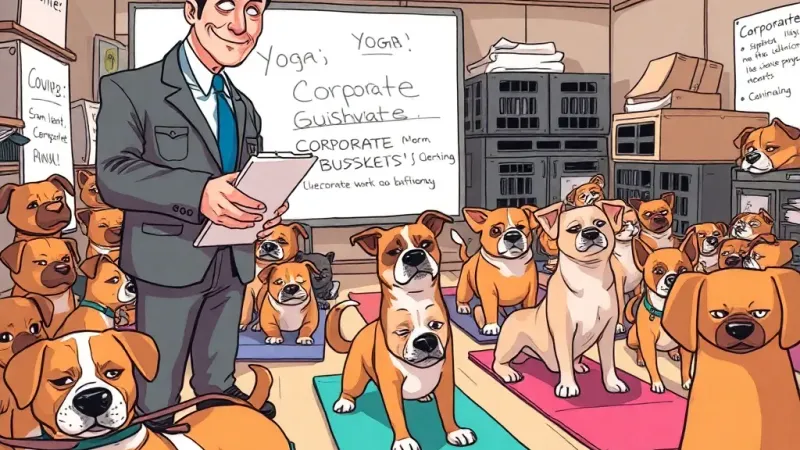
Under the new guidelines, shelter staff will facilitate access to "sensory enrichment zones"—areas where dogs can engage in self-directed play—and offer optional "peer-to-peer tail-wags" for mutual support. Educational pamphlets on "The Art of the Adoptable Gaze" and "Why Leash Manners Matter to Prospective Owners" are reportedly being translated into scent-based infographics for optimal canine comprehension. Additionally, dogs exhibiting what Dr. Vance described as "suboptimal emotional regulation" will be encouraged to explore rudimentary mindfulness exercises, including focused breathing during meal times and brief periods of solitary contemplation in designated "quiet kennels."
The announcement comes as DAS struggles with record intake numbers, with adoption rates failing to keep pace. Critics suggest the program is a thinly veiled attempt to shift the burden of care away from the municipal budget and onto creatures incapable of operating a smartphone, let alone navigating the complex emotional landscape of human-pet dynamics. "It’s brilliant, really," remarked local animal advocate Brenda Higgins, founder of 'Humans for Canines Who Can't Use Zillow.' "First, they declare them 'furry dependents,' then, when space runs out, they're suddenly 'emotionally autonomous beings responsible for their own housing solutions.' It’s the ultimate gig 2 for pets."
City Councilman Marcus Thorne defended the initiative, citing its innovative spirit. "This isn't just about reducing stress; it's about fostering entrepreneurship," Thorne explained. "Imagine a dog so adept at emotional self-regulation that they practically adopt themselves. That's efficiency. We’re simply providing the framework for our animal population to thrive within a challenging market environment." The council is reportedly considering a future phase of the program that would introduce "LinkedIn for Labs" profiles, enabling dogs to network directly with potential owners.
As part of the self-management strategy, DAS is also exploring a system where particularly well-adjusted dogs could mentor newer arrivals, teaching them the subtle art of not barking incessantly at the mailman. However, early reports indicate a significant number of shelter residents have responded to the new directive by simply sleeping more, a behavior officials are cautiously interpreting as "a form of passive resistance, or perhaps advanced meditation." Ultimately, officials hope the dogs will learn to appreciate the "tough love" approach as they ponder the complex financial and emotional calculus of their own existence, one existential bark at a time.