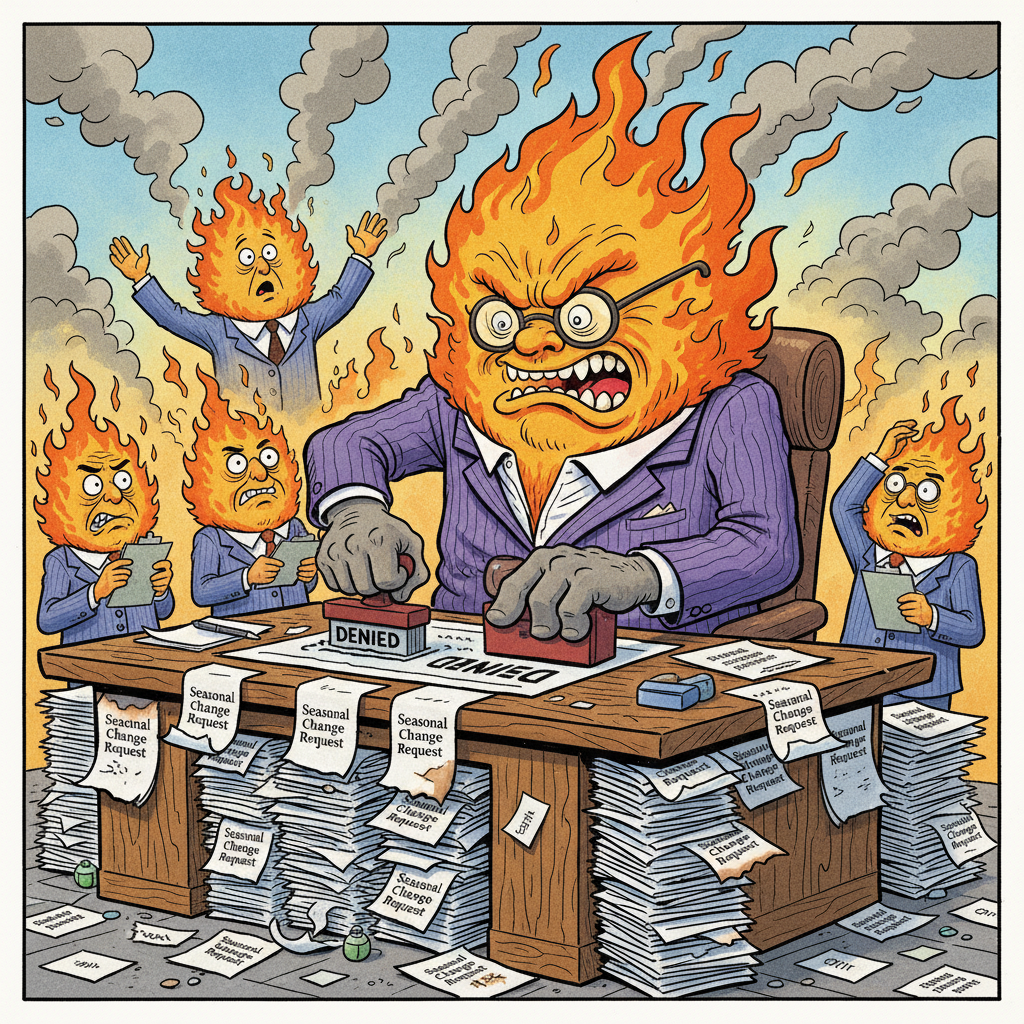
WASHINGTON D.C. — A groundbreaking new study reveals that climate change has ushered in an era of unprecedented administrative complexity for North American wildfires, which are now reportedly requiring formal requests to shift their operational windows. Researchers indicate that each ecosystem's fire season is demanding unique, bespoke adjustments, making blanket policy decisions obsolete and frustrating federal agencies.
“It’s no longer a simple ‘fire season starts here, ends there’ situation,” explained Dr. Brenda Lumina, lead climatologist for the National Bureau of Environmental Inconveniences. “We’re seeing individual wildfires in California demanding early spring starts due to dry conditions, while their counterparts in, say, Alberta, are filing for late-fall extensions. It’s a logistical nightmare for resource allocation.”
Officials from the U.S. Forest Service confirmed that they are now exploring the implementation of a 'Wildfire Season Variance Application' portal. “We need a standardized process,” stated agency spokesperson Mark Ember. “Right now, it’s just a free-for-all of spontaneous combustion and unscheduled conflagrations. We’re getting faxes, emails, even some smoke signals that just say 'SURPRISE!' It’s unprofessional.”
Sources close to the Department of Interior suggest that the next step might involve assigning each major wildfire a unique identification number and a dedicated case manager to handle its seasonal demands, ensuring maximum inconvenience for human populations.