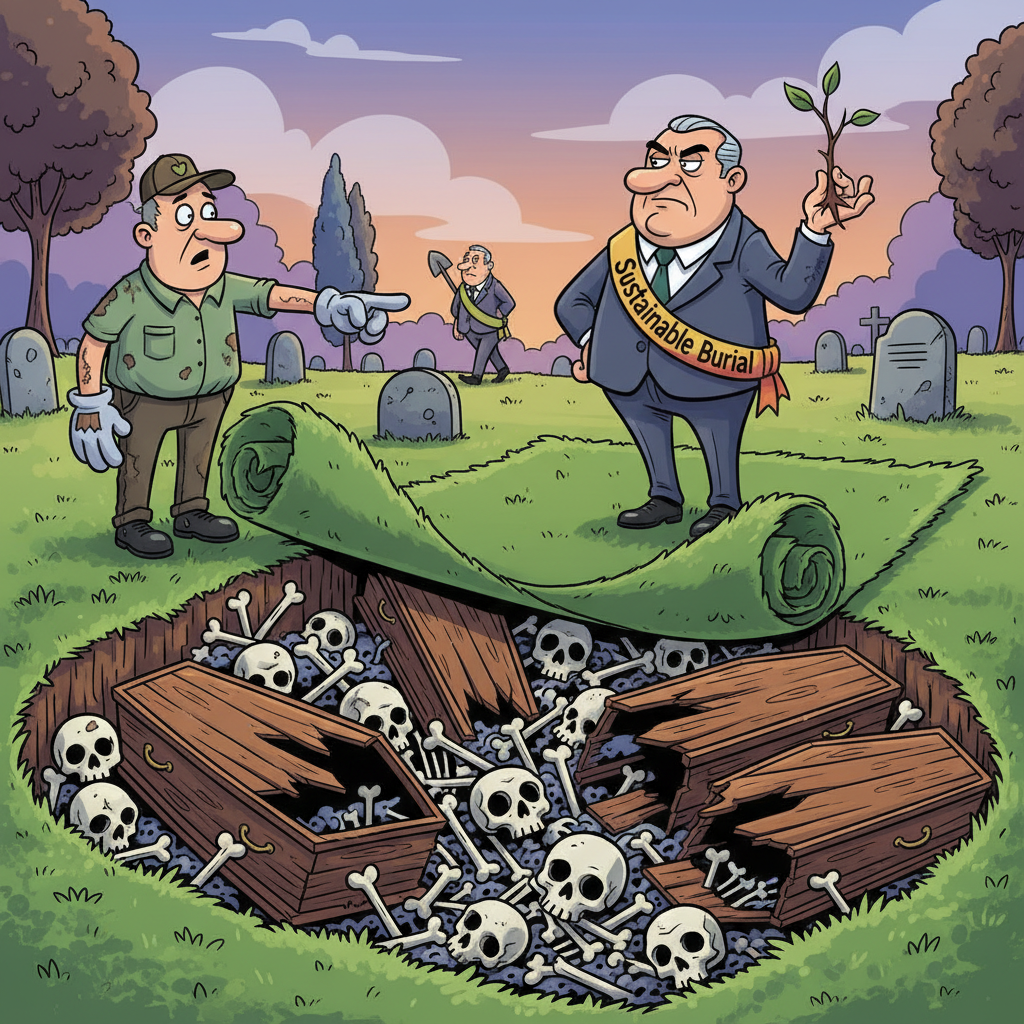
CHICAGO – Former cemetery employees facing charges for allegedly exhuming bodies and reselling burial plots are now pointing fingers at a tiny clump of moss, claiming it was the true saboteur of their 'pioneering urban land revitalization project.' Prosecutors successfully used advanced chlorophyll analysis to prove the moss, found on recently disturbed remains, was far too young to be from the original burial date, thus exposing the scheme.
“This is a gross mischaracterization of our efforts,” stated former groundskeeper Dale 'Digs' Peterson, speaking through his attorney. “We were simply implementing a circular economy model for the dearly departed. Think of it as upcycling, but for graves. The moss was just an enthusiastic, albeit premature, indicator of new growth and soil health.”
Dr. Evelyn Reed, lead botanist for the prosecution, scoffed at the defense. “The moss didn't 'sabotage' anything; it simply told the truth. Its chlorophyll, like a tiny green timestamp, confirmed these plots were being reused faster than a college textbook.” She added that the specific species of moss was a common local variety, not some exotic plant specifically engineered for grave-robbing detection.
Local authorities, meanwhile, are reportedly exploring new partnerships with lichenologists and fungi experts to prevent future 'unauthorized ground-based resource management' initiatives.