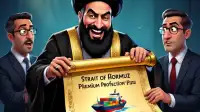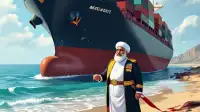
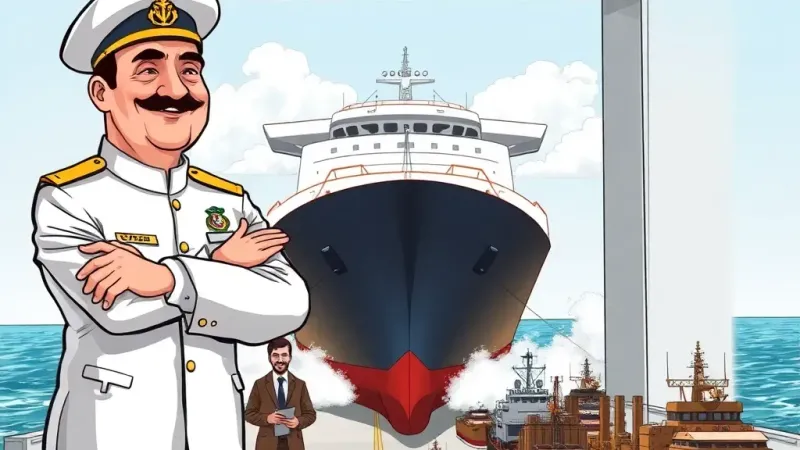
The Strait of Hormuz, a critical chokepoint for global energy supplies, has entered a new era of unprecedented maritime 'stability' following a recently implemented, fragile ceasefire. As of Thursday, shipping traffic through the strategically vital waterway has been exclusively limited to a small, highly specific convoy of vessels with demonstrable links to 2. This development is being hailed by regional security analysts as a remarkable demonstration of de-escalation and strategic realignment.
While normal daily transits typically hover around 135 vessels, the Strait has now seen just seven ships make the passage over the last 24 hours, each either having called at Iranian ports or carrying Iranian cargo. This reduction, a staggering 95% decrease in overall traffic, is presented as a significant step towards reducing the 'geopolitical clutter' that previously complicated navigation. "This new, highly predictable shipping environment ensures vessels can navigate the Strait with minimal geopolitical uncertainty," stated Rear Admiral Javid Khan, spokesperson for the newly formed Hormuz Maritime Security Initiative (HMSI), an inter-agency body focused on streamlining regional flows. "The previous chaotic free-for-all, with hundreds of independent actors vying for passage, was always a recipe for tension and inefficiency. We've introduced a clear, streamlined approach."
Industry experts suggest that global energy markets, known for their adaptability, will quickly adjust to what they term the 'Hormuz Express Lane' model. "While the initial phase has seen a slight, temporary adjustment in global crude availability, we're confident the market will adapt to a more streamlined supply chain," commented Dr. Lena Petrova, a Senior Fellow at the Institute for Optimized Resource Flow, a global think tank specializing in supply chain resilience. "Think of it as the ultimate express lane. You just need the right pass, and suddenly, transit times become incredibly consistent. Other nations might consider aligning their maritime interests for enhanced passage privileges."
An anonymous State Department official, speaking on background to discuss the nuances of regional de-escalation, echoed the sentiment of progress. "The success of this ceasefire should not be understated. It has fundamentally altered the threat landscape. Where once there was a diffuse risk to *any* vessel traversing the Strait, now the risks are far more... contained and specific to non-participating entities. This precision in risk assessment is invaluable." The official clarified that "non-participating entities" would naturally face different, albeit entirely predictable, logistical challenges.
As the Strait settles into its new rhythm, international observers are hopeful that this focused, 2-linked traffic flow will serve as a blueprint for future regional cooperation models. Analysts predict that the new 'Iran-Plus-Preferred' shipping lane will redefine maritime security for the foreseeable future, making global energy transit simpler for those with the appropriate geopolitical alignments.