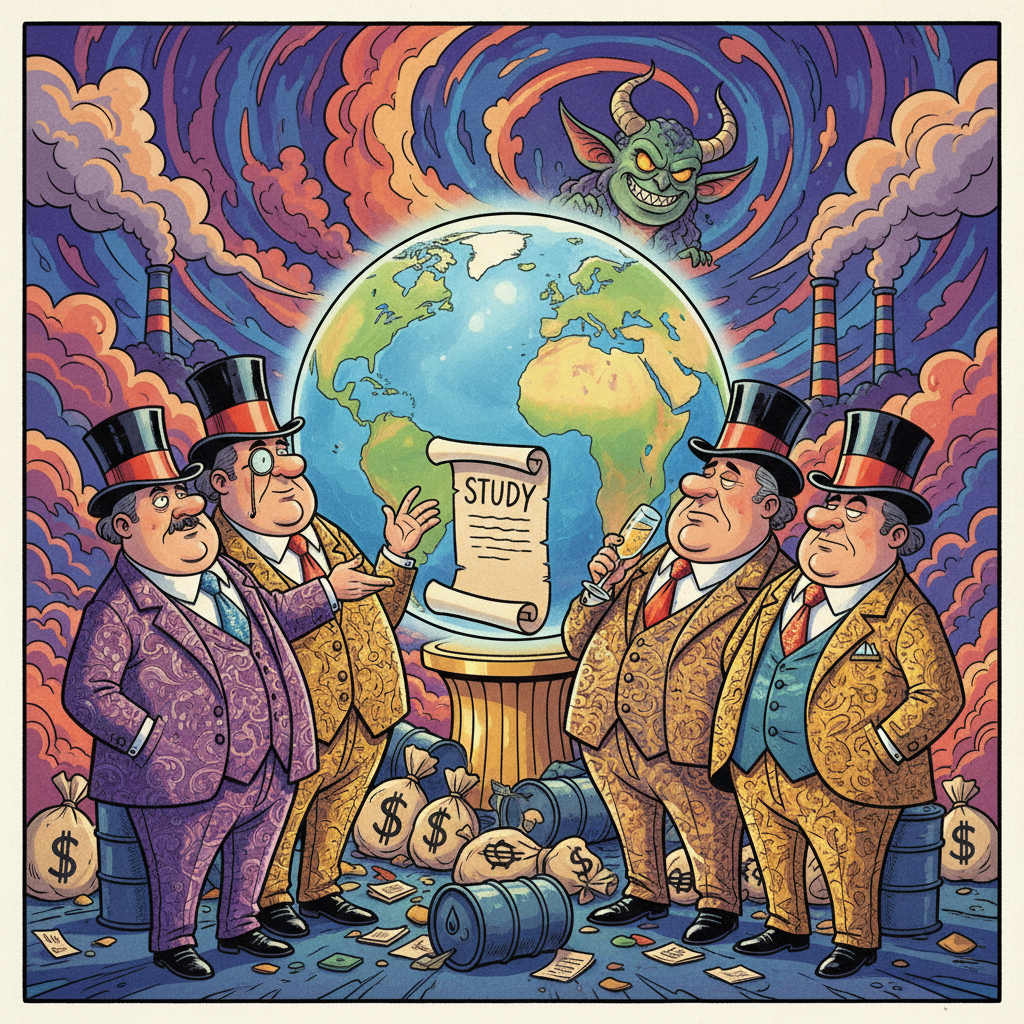
WASHINGTON D.C. — In a development hailed as 'stunningly obvious' by anyone with a basic understanding of economics and privilege, a new study from Penn State University has concluded that wealthy nations are uniquely positioned to decouple economic growth from greenhouse gas emissions. The research, which analyzed decades of data, found that countries with robust economies, advanced infrastructure, and significant disposable income can, in fact, implement policies that reduce their carbon footprint without tanking their GDP.
“We meticulously crunched the numbers, and what we found was truly revolutionary,” stated lead researcher Dr. Evelyn Thorne, adjusting her spectacles. “It turns out that when you have billions to invest in green technology, sustainable infrastructure, and public education campaigns, you’re far more likely to see positive environmental outcomes. Who knew?”
The study highlighted several 'strict conditions' necessary for this decoupling, including 'having a lot of money,' 'being able to afford things,' and 'not being perpetually burdened by colonial legacies or crippling debt.' Critics were quick to point out that these conditions seemed suspiciously tailored to the very nations the study claimed could achieve the feat.
“It’s like discovering that people who own private jets can afford to fly private,” quipped environmental activist Kai Sharma. “The real question isn’t whether they *can* do it, but why it took a multi-million dollar study to confirm what we’ve been screaming for decades while they’re still debating the cost of a bike lane.”
Officials from several G7 nations reportedly welcomed the findings, promising to 'carefully consider' the implications, particularly the part about being wealthy enough to make it happen without undue personal sacrifice.