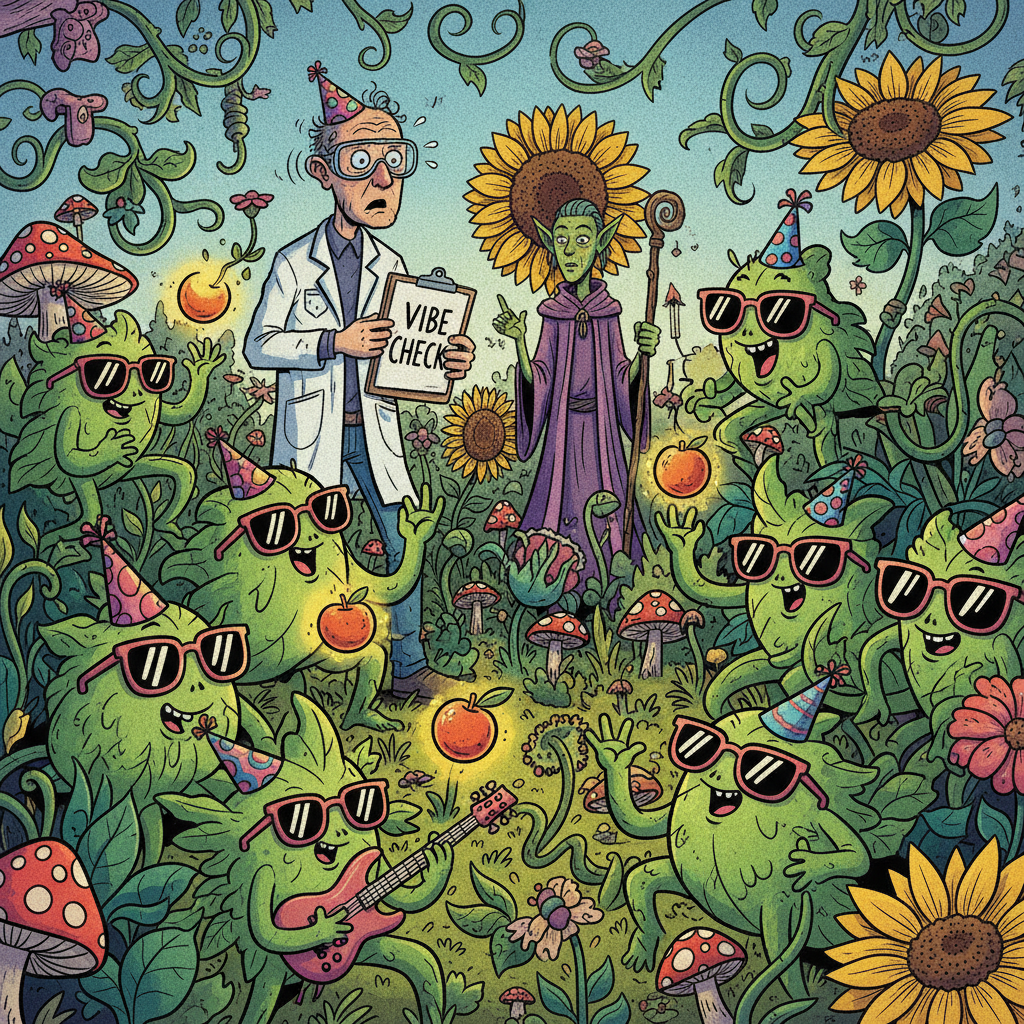
WASHINGTON D.C. – After decades of meticulous study into photoperiodism and vernalization, a consortium of international botanists has reluctantly concluded that plants, much like a significant portion of the human population, are simply making it up as they go along. The long-held belief that intricate genetic mechanisms dictate blooming schedules has been debunked, replaced by the more pragmatic explanation of 'vibes.'
“We’ve been looking for these sophisticated internal calendars, these molecular alarm clocks, for years,” stated Dr. Evelyn Reed, lead researcher at the Global Institute for Plant Sentience. “Turns out, it’s far simpler. The sun feels a certain way, the air has a particular je ne sais quoi, and the plant just thinks, ‘Yeah, now feels about right for some flowers.’”
The study, published yesterday in the journal *Botanical Irreverence*, details how advanced imaging techniques revealed no discernible complex decision-making processes within plant cellular structures. Instead, researchers observed what they describe as a 'collective botanical shrug' followed by spontaneous floral generation.
“It’s less about precise light-dark cycles and more about the general 'mood' of the season,” explained Dr. Reed. “If it’s been a bit chilly, and then suddenly there’s a string of nice days, the plant just decides, 'You know what? I’m feeling pretty good about this. Let’s do some blooming.' It’s surprisingly relatable.”
Critics argue the findings undermine the very foundation of plant biology, but Dr. Reed remains unfazed. “We’re just reporting what we observed. If plants want to be chaotic free spirits, who are we to impose our rigid scientific frameworks on them?”
The research has profound implications for agriculture, with experts now suggesting farmers might achieve better yields by simply projecting positive energy towards their crops. Or, you know, just guessing.