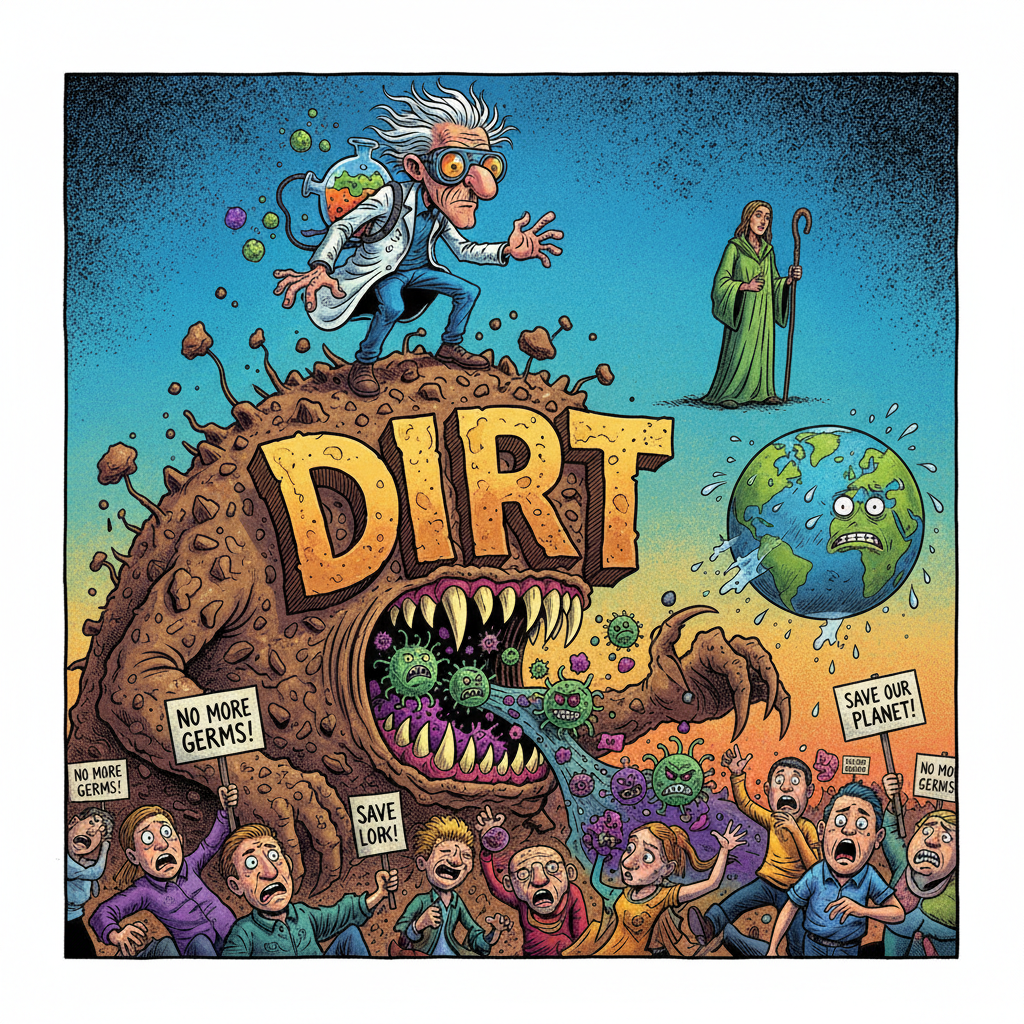
PASADENA, CA – A new study from Caltech has confirmed what many have long suspected: the very ground beneath our feet is now actively conspiring against human health, thanks to climate change. Researchers found a direct correlation between drought conditions and a surge in antibiotic-resistant microorganisms in soil, leading to a corresponding increase in untreatable infections in local hospitals.
“We always knew the planet was getting hotter and drier, but we assumed the dirt was at least neutral, maybe even passively supportive,” stated Dr. Evelyn Reed, lead author of the study and a soil microbiologist who now primarily communicates through a series of increasingly frantic Post-it notes. “Turns out, the soil is just biding its time, evolving new ways to make our antibiotics useless. It’s like it heard us complaining about the heat and thought, ‘Oh, you think *that’s* bad?’”
The study, published in *Nature Climate Change*, suggests that as regions become more arid, the microbial communities in the soil shift, favoring strains that are resistant to common antibiotics. This newfound resilience in the dirt then apparently translates into more difficult-to-treat infections in humans, effectively weaponizing the environment against an already struggling healthcare system.
“It’s a truly elegant system of self-correction, from the planet’s perspective,” commented Dr. Arthur Finch, a theoretical ecologist not affiliated with the study but visibly impressed. “We mess with the climate, the climate messes with the dirt, and the dirt, in turn, messes with us. It’s a perfect, self-regulating feedback loop designed to thin the herd.”
Experts now recommend that in addition to reducing carbon emissions, individuals should also avoid touching the ground, breathing air, or existing in general.