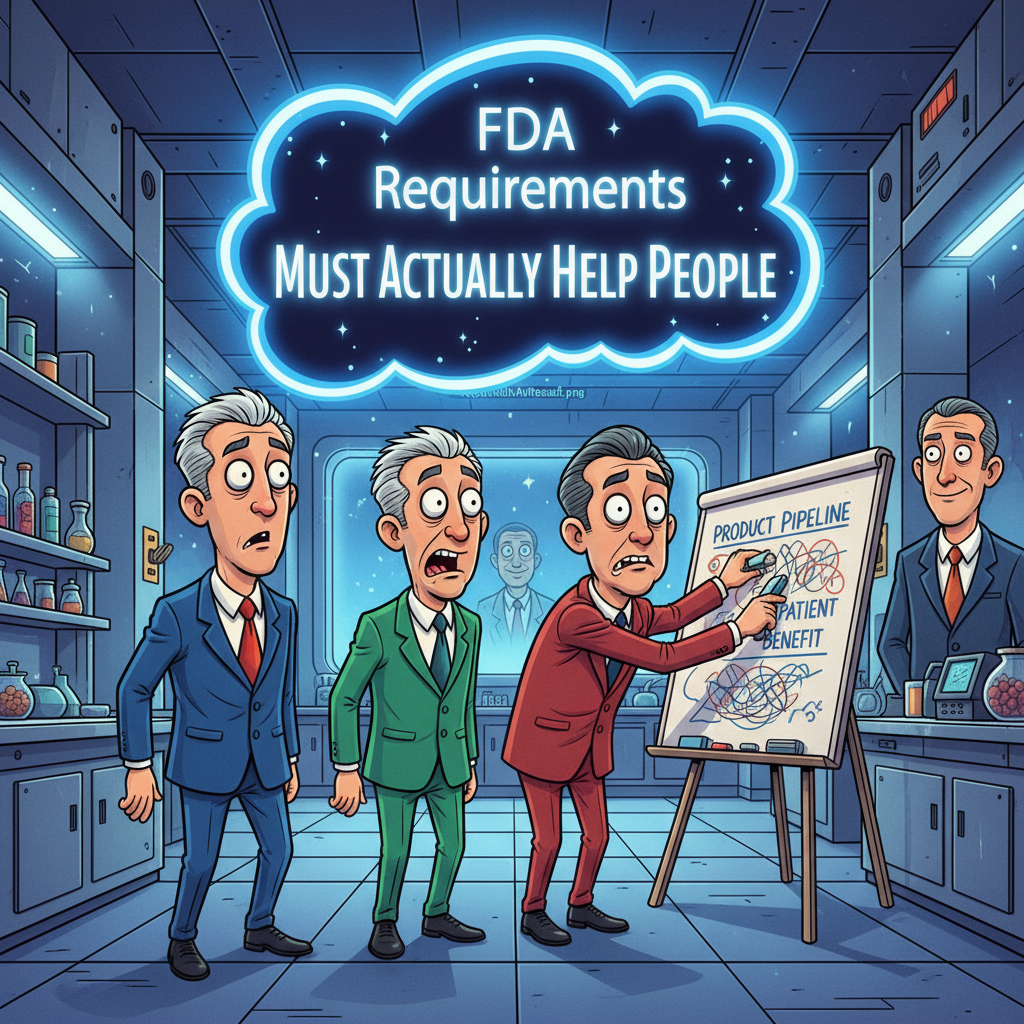
WASHINGTON D.C. — Biotech firm UniQure is reportedly reeling after a senior FDA official suggested their experimental gene therapy for Huntington's disease might need to, in a revolutionary new approach, 'actually help people' before receiving approval. The unexpected feedback has sent shockwaves through an industry accustomed to more lenient metrics, such as 'looks good on paper' or 'generated significant shareholder value.'
“We were under the impression that the primary goal was to get it into a syringe,” stated Dr. Evelyn Thorne, UniQure’s Head of Therapeutic Innovation, visibly flustered during an emergency press conference. “The idea that it needs to *do* something beyond existing as a product is, frankly, a paradigm shift we hadn't budgeted for. Our entire corporate strategy was built around the sheer audacity of charging exorbitant sums for something that, at best, doesn't actively harm the patient.”
FDA Commissioner Dr. Alistair Finch clarified the agency's position, noting, “While we appreciate the ambition, our updated guidelines now explicitly state that medical interventions should ideally confer a tangible benefit. We understand this is a departure from historical norms, but we believe it’s a crucial step towards modernizing healthcare.”
Industry analysts are now predicting a wave of panic across the pharmaceutical sector as companies scramble to re-evaluate their portfolios for any products that might inadvertently be effective.