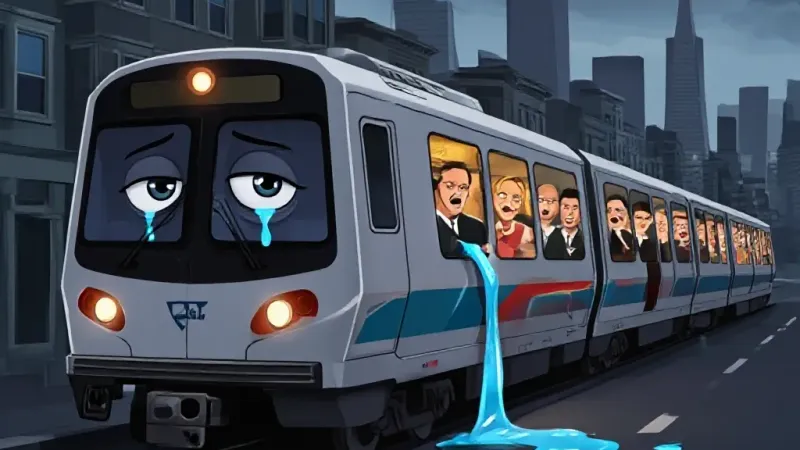
San Francisco’s Bay Area Rapid Transit (BART) system today issued an impassioned plea to local commuters, urging them to abandon their remote work setups and return to their physical offices, citing plummeting ridership that has left its once-bustling trains feeling ‘deeply unloved’ and financially vulnerable, raising questions about the future of multi-billion dollar public works projects when the public stays home.
‘We built these magnificent tunnels, these gleaming cars, all so people could sit in them, elbow-to-elbow, smelling each other’s lunch and judging each other’s Spotify playlists,’ stated BART spokesperson Karen Chen, wiping a performative tear from her eye during a press conference held on a desolate platform. ‘Now, our automated voice announces ‘next stop, Civic Center,’ and it just echoes through empty carriages. It’s heartbreaking. The trains themselves, if they could speak, would be asking, ‘Where did everyone go? Is it something we said?’
With ridership hovering at a pathetic 30% of pre-pandemic levels, forcing deep budget cuts and raising existential questions, BART officials are reportedly exploring initiatives ranging from aggressive lobbying for mandatory in-office mandates for all Bay Area employers—backed by legislative ‘encouragement’—to a new ‘Adopt-a-Seat’ program. This novel scheme would allow residents to pay a monthly fee to have a designated seat remain empty in their honor, ‘just so it knows someone cares and to help subsidize the ghost-ride operating costs, which are substantial even when empty.’ Sources close to the board also indicate discussions about a ‘Re-Commute-ification’ fund, which would pay companies to install replica BART turnstiles in their office lobbies, simply for employees to swipe in and out, simulating a daily commute without the actual physical travel.
‘Our infrastructure has feelings, too; it develops a sense of purpose over time,’ explained Dr. Alistair Finch, Director of the newly formed Institute for Aspirational Public Transit Proximity, a think tank dedicated to ensuring public works retain their relevance. ‘For decades, these trains facilitated human connection, albeit of the cramped, silently-judging, slightly-sweaty kind. To deny them that purpose now is almost… cruel. We invested billions in this network; it’s not just a transportation system. It’s a monument to the daily grind, and we are morally obligated to grind daily upon it, if only to fulfill its destiny.’
Critics argue BART should focus on reliability, safety, and actually adapting to new realities where urban centers function differently, but officials insist the real crisis is the emotional well-being of multi-billion dollar infrastructure designed solely to ferry warm bodies from one corporate campus to another, regardless of whether those campuses are actually being used.