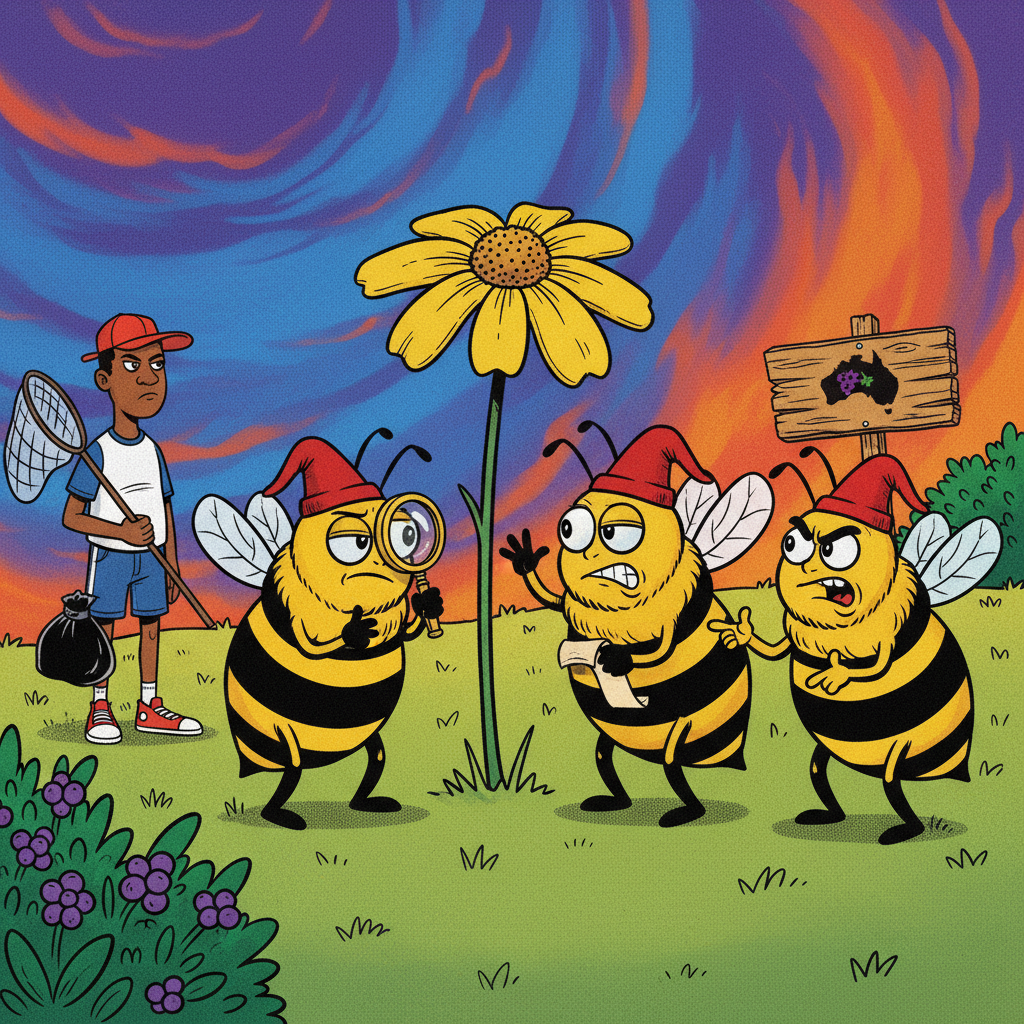
SYDNEY, AU – A groundbreaking study from the University of Sydney has confirmed what many beekeepers have long suspected: Australian honeybees are becoming insufferable foodies. Researchers announced today that honey produced from a diverse 'buffet' of native flora possesses significantly stronger antimicrobial properties than its single-origin counterparts, prompting bees nationwide to unionize for more sophisticated foraging options.
“We’ve observed a marked decline in bee morale when presented with monoculture fields,” stated lead researcher Dr. Penelope Nectar, adjusting her tiny bee-sized stethoscope. “They’re not just collecting; they’re curating. They want notes of eucalyptus with a hint of tea tree, followed by a robust wattle finish. Anything less, and frankly, their output is just… basic.”
The findings, which could revolutionize treatments for drug-resistant infections, have sent shockwaves through the beekeeping industry. Apiarists are now scrambling to diversify their floral offerings, with some even experimenting with 'bee sommeliers' to guide their colonies to the most complex and potent nectar combinations. “My girls used to be happy with just a patch of canola,” lamented veteran beekeeper Barry Buzzington. “Now they’re turning their antennae up at anything that doesn’t have a compelling backstory and a diverse botanical profile. It’s exhausting.”
Industry analysts predict a surge in 'artisanal' honey prices and a new wave of floral landscape architects specializing in 'bee-centric' biodiversity. Meanwhile, sources close to the honeybee collective report they are currently negotiating for better working conditions, including mandatory 'palette-cleansing' flights between foraging sites and a minimum standard for nectar viscosity.