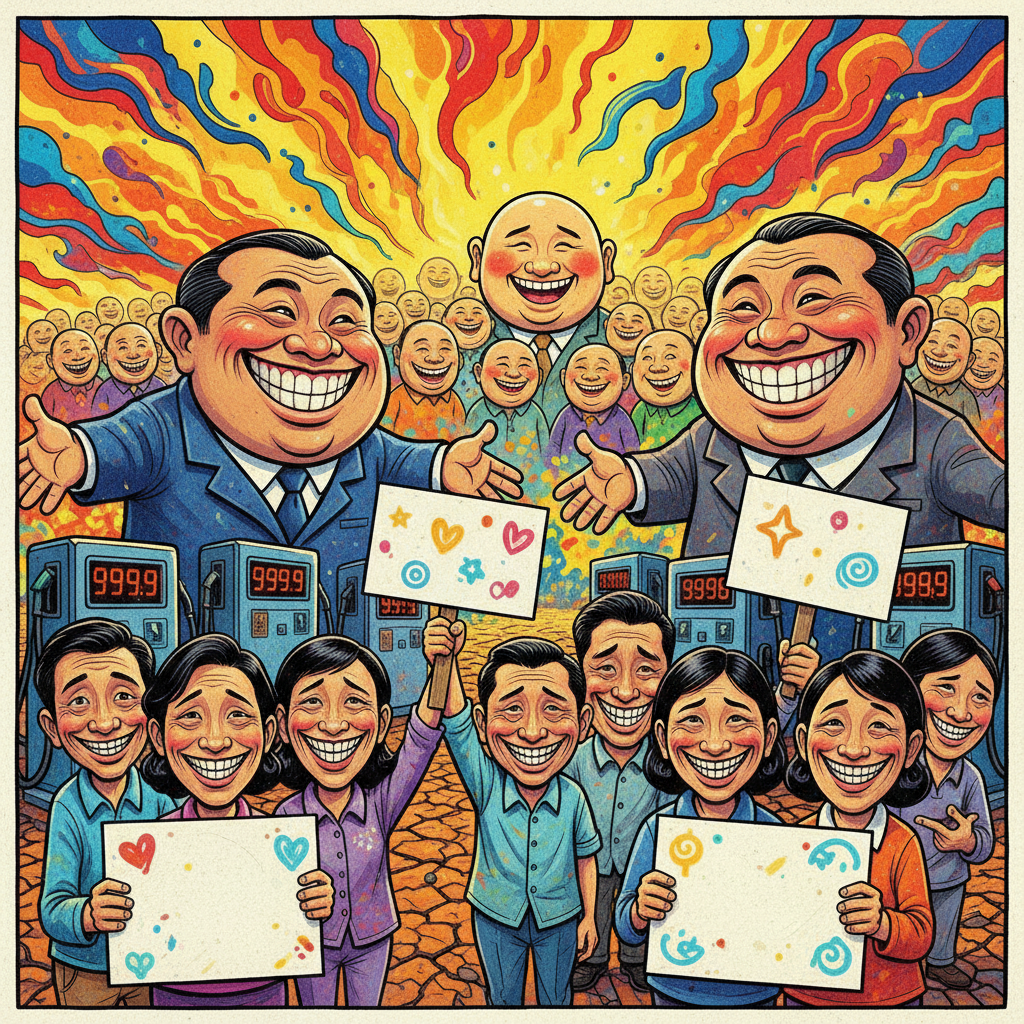
BEIJING — In a groundbreaking move to stabilize volatile energy markets, several Asian governments have begun implementing 'Optimism Quotas,' requiring citizens and businesses to maintain a minimum level of positive outlook to counteract the economic impact of rising oil and gas prices. The initiative, spearheaded by a newly formed 'Global Serenity Alliance,' aims to prove that collective good vibes can, in fact, pay the bills.
Under the new directives, daily 'affirmation metrics' will be collected via mandatory mood-tracking apps and public sentiment surveys. Businesses failing to project sufficient economic confidence could face penalties, including reduced subsidies or, in extreme cases, forced participation in corporate team-building exercises involving trust falls and motivational chanting.
'We’ve tried everything else: strategic reserves, price caps, begging OPEC,' stated Dr. Kenji Tanaka, lead economist for the East Asian Institute of Positive Economics. 'It turns out, the true untapped resource was the human spirit. If enough people genuinely believe gas is cheap, then, economically speaking, it practically is.'
Critics argue that the policy is a thinly veiled attempt to distract from systemic issues. However, government spokespeople maintain that a nation united in its belief that everything is fine is inherently more fiscally responsible. Early reports indicate a slight uptick in forced smiles and a significant increase in the sale of 'Everything Is Fine' merchandise.
The next phase of the program is rumored to include 'Collective Manifestation Sessions' aimed at lowering global commodity prices through sheer willpower.