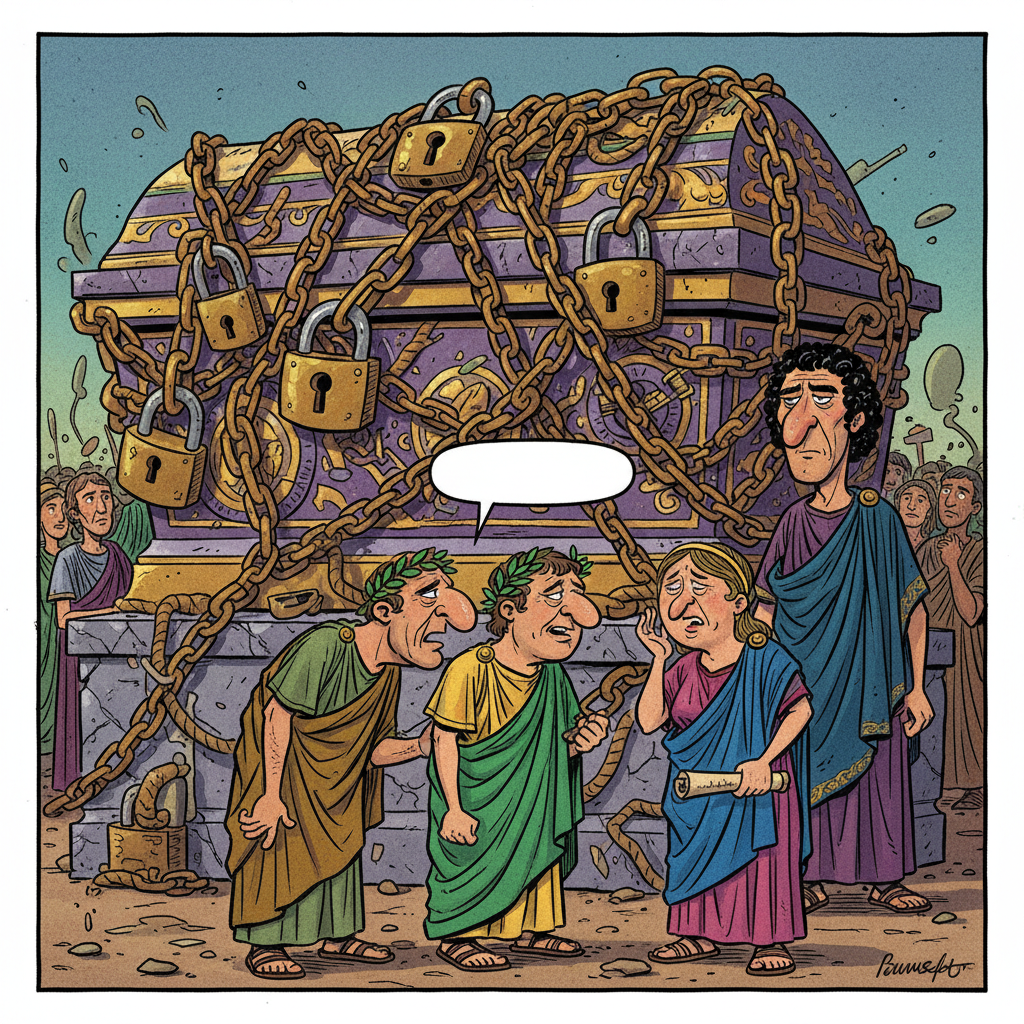
ROME — Groundbreaking archaeological discoveries in Rome's Ostiense necropolis have shed new light on ancient Roman social dynamics, with experts now theorizing that iron nails found on the chests of 1,800-year-old skeletons were less about warding off evil spirits and more about ensuring certain individuals remained permanently out of circulation.
“While initial theories focused on protecting the living from the dead, our latest analysis suggests a more nuanced, and frankly, relatable motivation,” explained Dr. Valeria Rossi, lead archaeologist for the dig. “It appears the Romans, much like us, occasionally encountered people they really, *really* didn’t want to see again. Ever. Even in the afterlife.”
The three burials, each featuring a skeleton with multiple iron nails strategically placed on the chest, indicate a ritualistic practice aimed at preventing the deceased from, as one ancient inscription loosely translates, 'popping up unannounced at the next toga party.' Researchers believe the practice was reserved for those who had overstayed their welcome, borrowed too much sesterces, or had particularly grating opinions on gladiatorial combat.
“We’re talking about the Roman equivalent of someone who always asks if you’re still watching Netflix,” added Dr. Marcus Thorne, a cultural anthropologist specializing in ancient social grievances. “The nails weren't just for keeping spirits in; they were for keeping *that guy* in.”
The findings are expected to revolutionize understanding of Roman funerary practices, moving away from purely spiritual interpretations to include the more practical, and often exasperated, concerns of daily life. Future research will focus on identifying the specific social faux pas that warranted such extreme post-mortem measures. Historians are already speculating about the Roman who invented the 'ghosting' technique.