
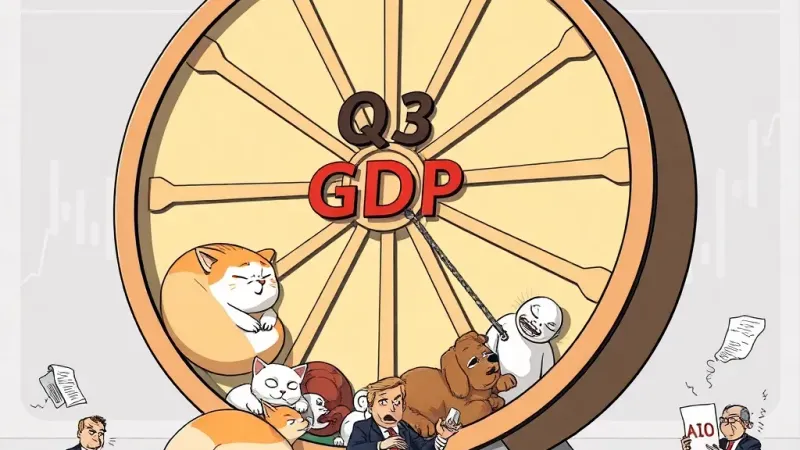
WASHINGTON D.C. — A recent report by the National Bureau of Economic Animal Behavior (NBEAB) has sent shockwaves through financial markets, indicating that the widespread and escalating practice of "passive lounging" among the nation's fauna poses a significant, unforeseen risk to third-quarter Gross Domestic Product (GDP) projections. Experts warn that a dramatic increase in non-productive relaxation by everything from squirrels to deer is creating an "unaccounted-for labor vacuum" in the natural world.
"We are witnessing an unprecedented level of disengagement," stated Dr. Thaddeus Finch, lead author of the NBEAB report and a senior fellow at the Institute for Economic Entomology. "Our models, which previously accounted for a baseline level of 'necessary idleness' in the animal kingdom, are now showing alarming spikes in what we can only describe as purely recreational inactivity. Squirrels are burying fewer nuts, migratory birds are taking longer breaks, and the average field mouse's quarterly foraging output is down 17%." Dr. Finch highlighted that this "anti-work ethic" is particularly prevalent in areas with abundant natural resources, suggesting a worrying link between ease of access and decreased economic drive.
Corporate America, which has increasingly leveraged "natural capital" and sought inspiration from animalistic efficiencies, is scrambling to respond. "This could fundamentally undermine the 'Hustle Culture from the Hive' seminars we've been selling to mid-level managers," explained Brenda Sterling, CEO of Biocentric Business Solutions. "How can we incentivize our human workforce to 'be like the busy bee' when the bees themselves are taking extended sun naps? We’re exploring 'Motivational Murmuration' drone programs and AI-driven predator simulations to re-engage natural instinctual productivity." Sterling added that initial pilot programs involving small, highly visible animals, like backyard squirrels, have shown limited success in boosting nut-burying rates, though "leaf-gathering metrics are showing slight upward movement in targeted demographic zones."
Analysts at Goldman Sachs' newly formed Ecosystem Futures division are particularly concerned about the long-term implications for the "companion animal productivity sector," a booming market for pet wellness, luxury accessories, and emotional support services. "If even domesticated animals begin to question their utility, where does that leave our projected CAGR for bespoke orthopedic pet beds?" asked senior analyst Kevin 'K-Dog' Douglas. "We're recommending a diversified portfolio, including investments in motivational speaker contracts for border collies and a new line of 'performance-enhancing' catnip."
The report concludes with a stark warning: if left unchecked, this epidemic of animal comfort could lead to a philosophical crisis among the human population, causing people to question their own relentless pursuit of profit.