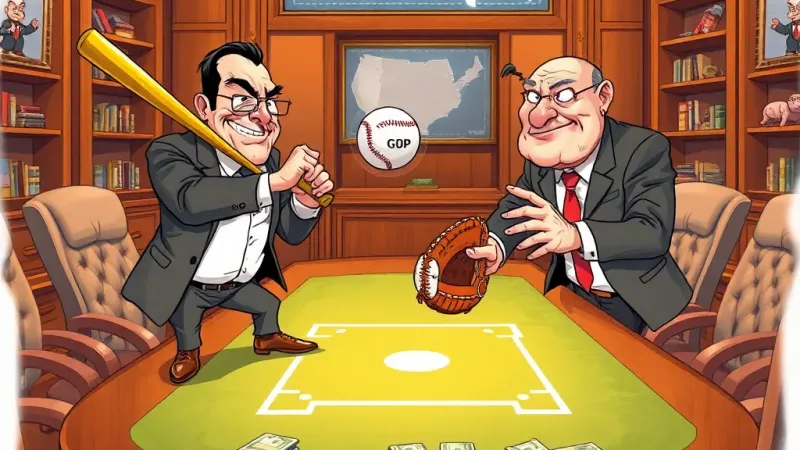
AUSTIN, TX – Economists across the Southern Collegiate Economic Corridor are closely monitoring this weekend’s three-game baseball series between the University of Texas Longhorns and the University of Alabama Crimson Tide, as the outcomes are expected to heavily influence regional Gross Domestic Product (GDP) projections for the coming fiscal quarter. The highly anticipated matchup, more critical than any legislative budget debate, will serve as a bellwether for institutional brand valuation and, consequently, state-level consumer confidence.
Sources within the Department of Collegiate Fiscal Oversight indicated that a strong performance by either team could trigger a significant uplift in media rights negotiations, booster donations, and merchandise sales, particularly for specialty branded lawn care equipment and luxury RV accessories. "Frankly, we're looking at a potential 0.3% swing in Alabama's Q2 GDP if they sweep, and up to 0.45% for Texas," stated Dr. Alistair Finch, Chief Pro-Forma Analyst for the Southeastern Conference's (SEC) Office of Economic Impact. "This isn't about bats and balls; it's about billions in speculative capital and the future solvency of entire alumni networks."
The economic implications extend beyond immediate revenue streams, touching upon everything from local real estate markets in university towns to the valuation of state-issued municipal bonds tied to athletic department success. A recent study by the National Bureau of Sports Economics (NBSE) found that a single top-tier college athletic program can account for up to 12% of its state's annual tourism revenue, dwarfing traditional attractions like historical monuments or national parks. "Our fans don't visit the Alamo, they visit Darrell K Royal-Texas Memorial Stadium and then buy enough branded cargo shorts to float a small nation," commented Brenda Vance, a spokesperson for the Texas Higher Education Business Alliance. "The ROI on a competitive baseball program now consistently outperforms venture capital investments in AI start-ups, mostly because you don't have to explain what a 'slider' is to a state legislator."
Critics argue that tying state economic health so directly to the performance of collegiate athletes, many of whom are technically 'amateurs,' creates an unsustainable and morally dubious financial ecosystem. However, university regents and state legislators remain steadfast, pointing to the undeniable metrics. "When the Longhorns win, our state's credit rating improves, plain and simple," said State Senator Eleanor Vance-Whitaker (R-West Austin), a prominent member of the State's Appropriations Committee. "These young men are not just playing for a championship; they’re playing for our bond yields, our pension funds, and the average taxpayer's ability to refinance their home at a favorable rate. It's a heavy burden, but they get free tuition and access to top-tier sports drinks, which is more than most of our constituents get for impacting the state's economy." The series is also expected to influence the quarterly allocation of state funds for infrastructure projects, with winning teams' states reportedly receiving preferential consideration for highway upgrades and new data centers.
As the first pitch approaches, millions of Texans and Alabamans will anxiously watch, not just for the thrill of victory, but for a clear indication of whether to invest in municipal bonds or just hoard canned goods.