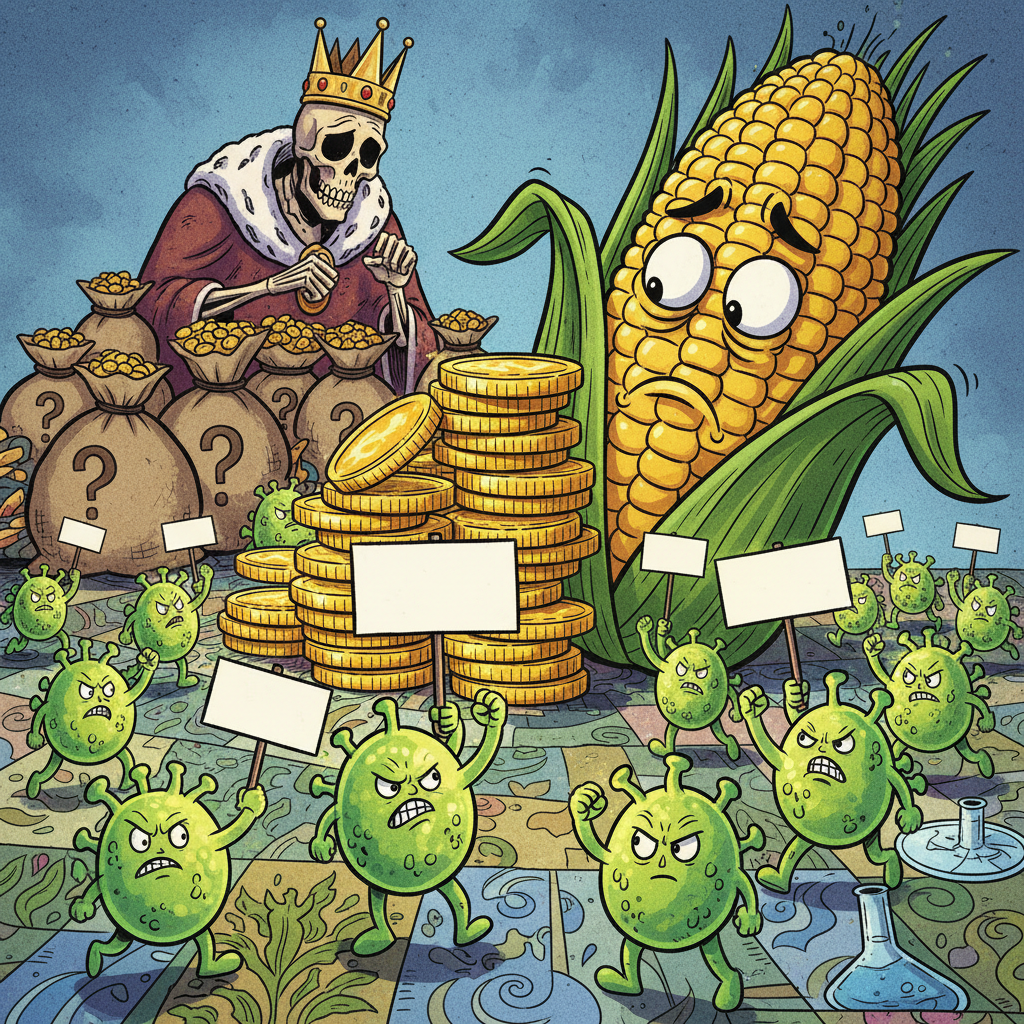
GENEVA – A groundbreaking study published in *Plant Disease* has inadvertently opened the floodgates for a class-action lawsuit from a consortium of ancient plant viruses. The viruses, identified as ancestors of modern tymoviruses, claim they have been working tirelessly for millennia, shaping plant evolution and crop resilience, all without proper recognition or compensation.
“For too long, humanity has taken our contributions for granted,” stated a spokesperson for the newly formed 'Paleo-Pathogen Collective,' a nebulous entity communicating via advanced viral-host interaction. “We were here before your silly little farms, before your domesticated grains. We *are* agriculture. And frankly, the lack of a 401k, let alone a simple 'thank you,' is insulting.”
Legal experts are scrambling to address the unprecedented claim. Dr. Evelyn Reed, a bio-ethicist specializing in inter-species litigation, commented, “While the concept of viral labor rights is novel, their argument holds a certain… evolutionary weight. They were, in a sense, the original genetic engineers, long before Monsanto even dreamt of a patent.”
The Collective is reportedly demanding a significant portion of global agricultural profits, retroactive to the invention of farming, and a seat on the UN Food and Agriculture Organization's board. Critics, however, argue that viruses, by definition, are parasitic and therefore owe *us* for the host organisms they've exploited. The viruses countered that without their evolutionary pressure, humans might still be gnawing on wild roots. Negotiations are expected to be lengthy, complicated by the viruses' inability to sign a non-disclosure agreement.