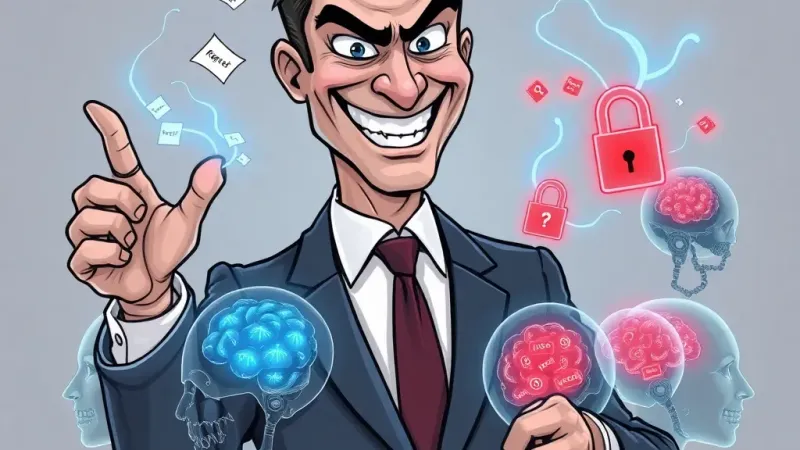
LONDON – Leading global professional services firm Aon has announced that advances in artificial intelligence are significantly expanding “addressable markets” by allowing corporations to identify and monetize previously unquantifiable human experiences, including the fleeting sting of regret and the low-level anxiety associated with forgotten digital credentials.
According to Aon CEO Greg Case, these emergent sectors represent a vast, untapped frontier for capital growth. New AI models, developed in partnership with undisclosed data analytics firms, can now parse subtle biometric and behavioral cues to generate predictive scores for a user's likelihood of experiencing post-purchase remorse or chronic password-related frustration. These 'Regret Futures' and 'Credential-Loss Derivatives' are already attracting significant venture capital, promising investors returns based on the predictable patterns of human fallibility.
“We’re no longer limited by traditional demographics or purchase histories,” explained Dr. Aris Thorne, Aon’s Chief Market Quantifier, in a leaked internal memo obtained by Hambry. “Our algorithms can now detect the almost imperceptible micro-expressions of shame correlated with late-night snack purchases, or the unique cortical ripple indicative of a 'did-I-lock-the-front-door' thought. This isn't just data; it's ambient cognitive residue, and it’s a goldmine for targeted ads and hyper-personalized 'resolution-as-a-service' micro-transactions.”
The technology reportedly utilizes advanced pattern recognition across aggregated smart device data, social media sentiment, and even electrodermal activity from increasingly ubiquitous wearable tech. Companies can then bid on access to cohorts of individuals exhibiting specific regret profiles, offering them everything from tailored diet plans to premium memory-aid subscriptions. Similarly, the market for 'Forgotten Password Insurance' is projected to reach $85 billion by 2027, with policies priced according to an individual's statistically modeled propensity for digital amnesia.
While some critics have raised concerns about the extensive commodification of inner life, Professor Evelyn Reed, a leading expert on neuro-capitalism at the Stanford Institute for Monetized Consciousness, dismissed such qualms as Luddite thinking. “Of course, there are ethical considerations, but frankly, what’s more ethical than unlocking trillions in shareholder value from previously wasted cognitive resources? This is simply the next logical step in optimizing human capital for maximum economic output.”
Industry analysts now predict that by 2028, even the residual static from your most mundane, unspoken thoughts will be bundled into tradable futures contracts, ensuring no sliver of personal experience goes unmonetized.