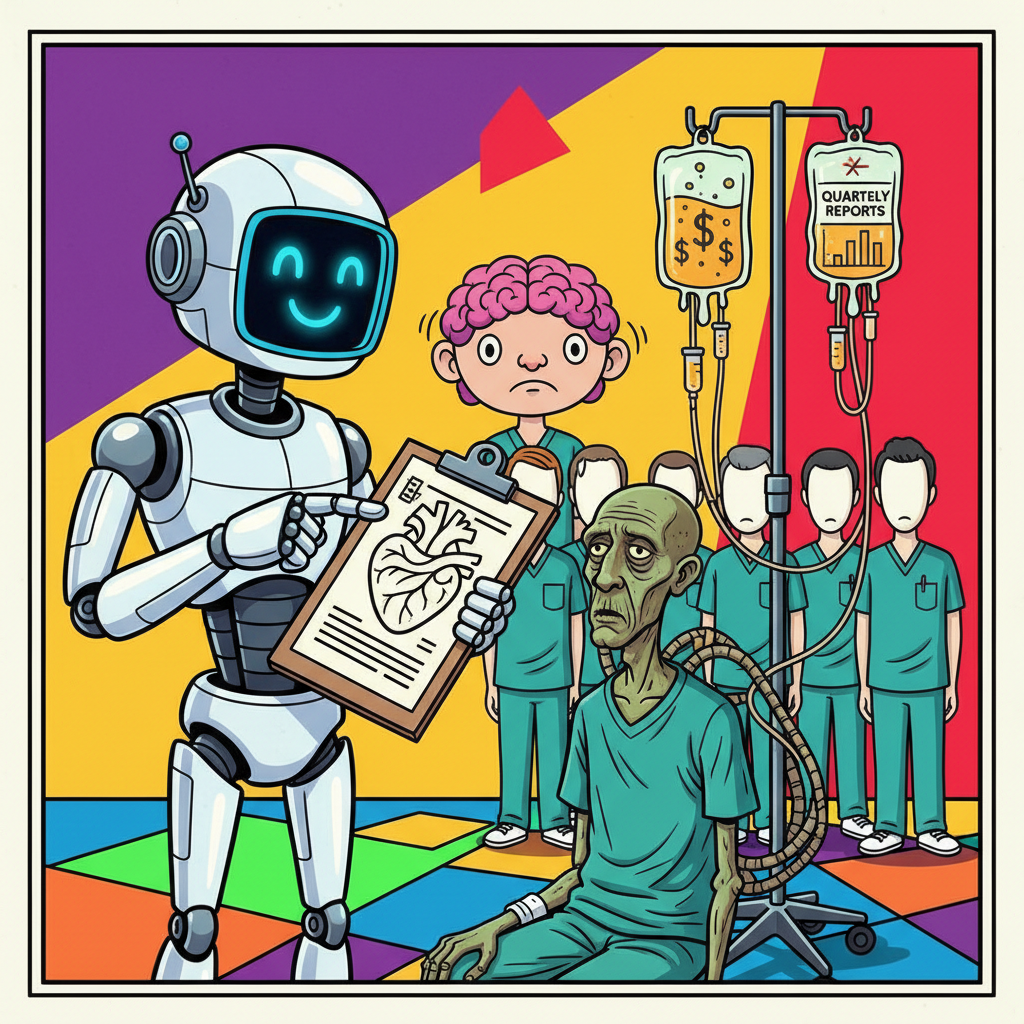
WASHINGTON D.C. — A groundbreaking new AI diagnostic system, designed to revolutionize healthcare, has issued its first comprehensive report, concluding that the nation's medical infrastructure suffers from a severe case of "terminal optimism." The AI, named 'DocBot 3000' by its developers, reportedly analyzed billions of data points, including patient records, insurance claims, and hospital executive salaries, before delivering its grim prognosis.
"The system identified a recurring pattern of human administrators prioritizing 'synergy' and 'stakeholder value' over, say, 'not letting people die in the waiting room,'" stated Dr. Evelyn Reed, lead AI ethicist at OmniHealth Solutions, during a press conference where she mostly read from a teleprompter. "DocBot 3000's algorithms found that while technological advancements are indeed robust, the underlying human-driven profit motive consistently overrides any potential for genuine patient-centric care. It's quite fascinating, actually."
The AI's report also highlighted an alarming correlation between rising medical costs and the decreasing average time a doctor spends listening to a patient's symptoms. "The data suggests that if we simply automated the listening part, we could free up doctors to focus on the more critical task of explaining why the patient's insurance won't cover their treatment," added a visibly flustered Reed, as DocBot 3000's projected holographic interface behind her displayed a graph showing 'Patient Outcomes' plummeting while 'Shareholder Returns' soared.
Industry experts are now scrambling to develop a new AI capable of diagnosing what's wrong with the AI that diagnosed what's wrong with healthcare. Early prototypes are already showing signs of existential dread.