

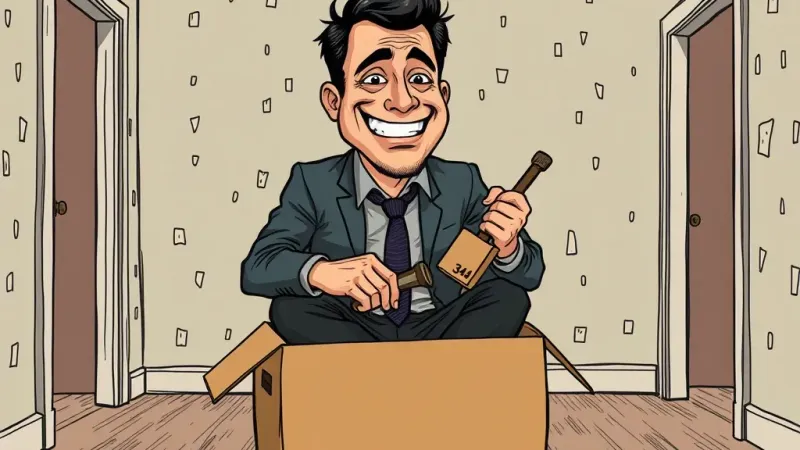
Citing a desperate need to feel something other than the crushing weight of structural inflation and a dying planet, local thirty-four-year-old project manager Dave Miller confirmed Friday that his entire disposable income is now funneled directly into limited-edition Barbie dolls and miniature plastic tractors.
Miller, who routinely breaks down in tears while trying to select health insurance plans, reported feeling a profound sense of inner peace while meticulously arranging tiny plastic accessories inside a dreamhouse he purchased with funds originally earmarked for a root canal.
'When you realize you will never own property, the next logical step is to spend four hundred dollars on a nostalgic plastic garbage truck from 1994,' Miller said, adjusting a tiny plastic motorcycle helmet onto an action figure representing an era when the middle class wasn't an ancient myth. 'My parents bought a house at my age. I bought a posable Batman with a real cloth cape and five points of articulation. It’s called self-care, Brenda.'
Across the nation, toy manufacturers are scrambling to cater to this surging demographic of emotionally stunted financial refugees. Retail analysts report that adults aged twenty-five to forty-five now account for a staggering portion of toy sales, proving that when the housing market becomes an impenetrable fortress of wealth hoarding, nothing heals the soul quite like a collector’s edition Teenage Mutant Ninja Turtle.
Industry insiders note that the 'kidult' market has completely redefined retail strategy, moving away from children—who have notoriously poor credit scores and terrible taste—and toward millennials whose collective trauma makes them prime targets for nostalgia-based emotional extortion. Companies have realized they can slap a fifty-dollar price tag on a plastic figurine of a cartoon ghost from 1988 and watch grown adults weep with gratitude for the temporary escape from answering work emails at 9:00 PM on a Sunday.
'Children are terrible consumers,' explained Hasbro senior vice president of emotional pacification Marcus Vance. 'They want to play with the toys, break them, and eventually grow up. Adults, on the other hand, will keep the item permanently sealed in a mint-condition cardboard prison, display it in a climate-controlled studio apartment they share with three roommates, and post aggressive defense threads on Reddit if anyone questions the financial wisdom of spending grocery money on a plastic spaceship.'
Vance added that the company is currently developing a new line of toys specifically targeted at late-stage capitalism survivors, including a 'Stagnant Wage Accountant' action figure featuring a tiny, non-removable expression of quiet desperation and a miniature spreadsheet that reads 'Negative Balance.'
Sociologists attribute the trend to a collective psychological retreat into childhood, driven by the terrifying realization that adult life is essentially just an endless subscription model with no pause button. Rather than confronting interest rates, geopolitical instability, or the slow collapse of civilization, millions of fully grown citizens have chosen to retreat into bedrooms overflowing with stuffed animals and brightly colored interlocking bricks.
'It’s not regression, it’s tactical avoidance,' explained cultural anthropologist Dr. Sarah Geller. 'When the social contract is completely shredded, you cling to whatever plastic representation of joy you can legally purchase without a background check. A LEGO Millennium Falcon doesn't lay you off via a poorly formatted Zoom call.'
As the holiday shopping season kicks into high gear, toy aisles across the country are expected to be packed not with children making Christmas lists, but with exhausted thirty-somethings violently elbowing each other out of the way to secure the last remaining vintage Care Bear. Experts predict the trend will continue to grow until either the economy finally collapses into dust or Hasbro releases an action figure of a landlord holding an eviction notice, whichever comes first.