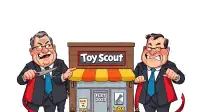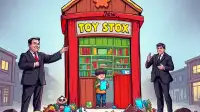


Amid the steepest toy price hikes in a generation, local independent toy store owners across the country are bravely ensuring that children learn the crushing realities of supply chain economics before they even learn how to tie their shoes.
Store proprietors report that the cost of importing injection-molded plastic has reached a point where a single articulated superhero action figure now costs roughly the same as a tank of mid-grade gasoline or a community college textbook. Rather than absorbing the blow, these beloved community anchors are passing the suffering directly to the demographic with the least disposable income and the worst credit scores: preschoolers.
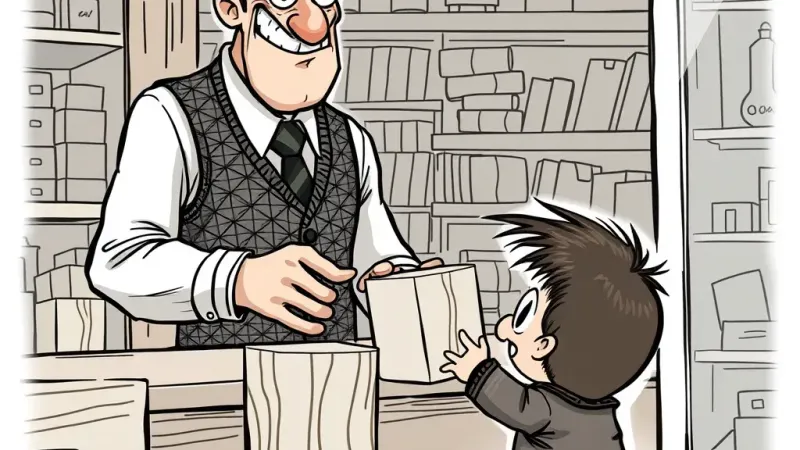
"Look, we used to sell a little wooden train for twelve dollars," said Brenda Higgins, owner of The Giving Tree Toy Emporium in Portland, adjusting her glasses while violently stamping a forty-percent price increase onto a box of washable crayons. "Now that same train costs forty-eight dollars, and frankly, it builds character. If little Timmy wants to push a painted block of pine across the hardwood floor, he needs to understand that nothing in this world is free, least of all a mediocre approximation of a steam engine. We are teaching these kids about inflation early. When they cry because they can't afford the Lego set, that's not a tantrum. That's market awareness."
Industry analysts note that the toy market is undergoing a fundamental shift, moving away from affordable joy and toward luxury investment assets for parents desperately trying to buy their children's affection ahead of a looming recession. Major manufacturers have responded by shrinking product sizes while simultaneously jacking up prices, a technique pioneered by snack-chip conglomerates and now courageously applied to plush bears.
Independent retailers, long romanticized as whimsical refuges from corporate big-box brutality, are embracing their new role as ruthless micro-capitalists. Many are introducing tiered membership models for toddlers, allowing children with premium parental income brackets early access to newly arrived plushies, while poorer children are relegated to the clearance bin of slightly dented cardboard puzzles.
"Parents come in here weeping about spending ninety dollars on a plastic kitchen set that doesn't even dispense real water," said Marcus Vance, who has operated a specialty toy boutique in Chicago for twenty-two years. "And I look them dead in the eye and I tell them: 'You think this is bad? Wait until they hit the housing market.' We aren't just selling toys anymore. We're selling a mild preview of the despair that awaits them in adulthood. And honestly? Business has never been better."
Economists point out that families are increasingly forced to choose between groceries and a battery-operated singing puppy that repeats the same three phrases until the user loses their mind. Predictably, families are choosing the puppy, because unlike groceries, the puppy provides short-term neurological distraction from the collapse of social safety nets.
As the holiday shopping season approaches, mom-and-pop shops are preparing by installing velvet ropes, bouncers at the door to check credit scores, and biometric scanners that ensure no child touches a doll without verified parental authorization. Store owners remain optimistic, noting that while the middle class may be vanishing, the burning need for parents to bury their guilt under mountains of overpriced landfill-bound plastic remains entirely recession-proof.