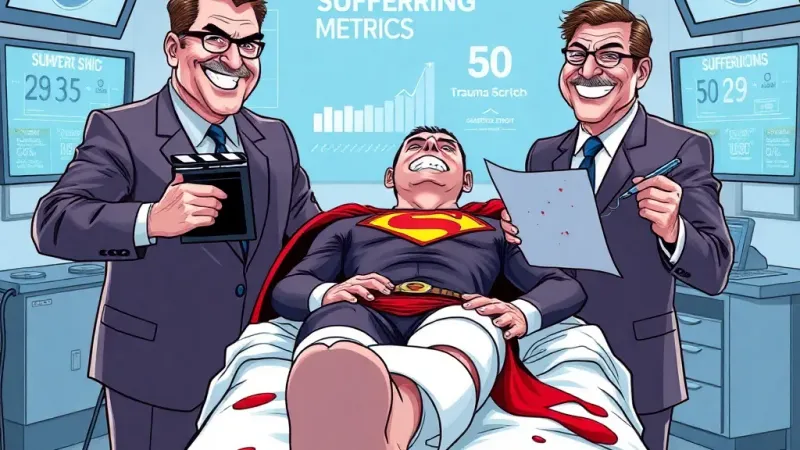
LOS ANGELES – Following overwhelming fan and critical reaction to the grotesque "Clayface" trailer, Warner Bros. Discovery has formally announced a radical pivot for its DC Cinematic Universe, confirming all future projects will now operate under a "Trauma-Based Shared Universe" mandate. The studio's new directive prioritizes "visceral, character-defining suffering" and extensive physical disfigurement as core tenets for every hero and villain entering the revamped DC slate.
"For too long, our audiences have been burdened by heroes who merely 'overcome' adversity," stated Brenda Sterling, DC Studios' newly appointed Head of Existential Anguish. "What the 'Clayface' preview proved beyond a shadow of a doubt is that true cinematic resonance comes from making viewers deeply uncomfortable. We're talking genuine, gut-churning empathy for a protagonist whose internal agony manifests as externally horrifying mutations. It’s a paradigm shift from 'fighting evil' to 'just trying to cope with one's own irreversible degeneration.'" Sterling cited extensive market research indicating a significant uptick in viewer engagement for content where characters "just seem to be having a profoundly terrible time, all the time."
Under the new guidelines, previously announced projects are undergoing rapid re-writes to amplify elements of chronic pain, psychological collapse, and unsightly bodily deterioration. Sources close to the production of the upcoming "Superman: Legacy" hinted at early script revisions featuring an increasingly jaundiced Man of Steel perpetually struggling with Kryptonian gallstones, while the new Batman series will reportedly delve into the Dark Knight's crippling plantar fasciitis and a recurring fungal infection that forces him to wear Crocs under his suit. "It's about making them relatable," explained one anonymous writer, "who hasn't woken up feeling like a shapeless blob of regret?"
The mandate extends to all DC properties, including animated features and streaming series. Early pitches for a new Teen Titans show reportedly include Cyborg battling a chronic battery acid leak, Starfire developing severe social anxiety requiring constant emotional support animals, and Beast Boy’s powers manifesting as an endless series of debilitating allergic reactions to his own animal forms. "We want audiences to leave the theater thinking, 'Wow, that hero really needs some serious medical intervention, preferably experimental and highly dangerous,'" Sterling added, outlining the new "post-credit clinic scene" standard for every film.
The studio hopes this unflinching commitment to distress will solidify the DCU's unique brand identity in a crowded superhero landscape. "It's no longer just about saving the world," Sterling concluded, "it's about how truly awful you can feel while doing it, and ideally, looking worse for wear."