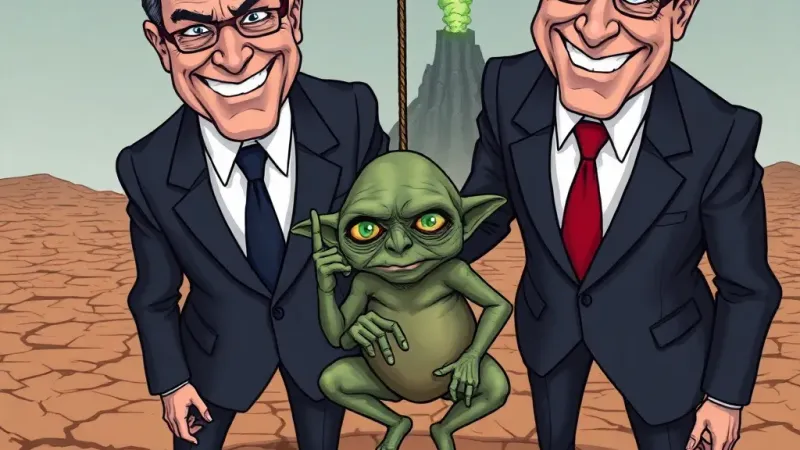
LOS ANGELES – Warner Bros. officially announced "The Lord of the Rings: The Hunt for Gollum," a new cinematic installment slated for a December 17, 2027 release, confirming the studio’s continued commitment to extracting every last drop of pre-existing emotional equity from its most beloved intellectual property. The film, which will see the return of original cast members Ian McKellen and Elijah Wood, alongside Andy Serkis reprising his role as Gollum and directing, is set to explore the untold adventures of Middle-Earth that nobody explicitly asked for.
Studio representatives lauded the project as a "passion-driven endeavor," a sentiment echoed by Mr. Serkis, who expressed excitement about "delving deeper into the complex psyche of a character whose entire arc was already quite thoroughly covered." Industry analysts, however, were quick to offer a more pragmatic assessment. "Look, 2 isn’t making these movies because J.R.R. Tolkien left a secret chapter about Gollum's tax returns," stated Dr. Evelyn Thorne, Chair of Franchise Sustainability at the University of Media Economics. "They're making them because the algorithms confirmed that 'Gollum' generates 17.3% higher pre-release engagement than anything with a truly original premise. It’s an IP ecosystem optimization strategy, pure and simple."
The announcement, made during Warner Bros.' CinemaCon presentation, was met with predictable enthusiasm from fans whose primary cinematic pleasure now derives from recognizing things they’ve already seen. While specifics about the plot remain scarce, sources close to the production indicated that the narrative will primarily involve Gollum looking for something, probably a ring, and then not finding it until much later, thus preserving the integrity of established canon while still offering the thrilling spectacle of a major studio production where very little can actually happen. Jamie Dornan is slated to portray a younger Aragorn, promising to finally answer the burning question of what a brooding, future king might look like with a more contemporary hair product.
Insiders suggest the studio has internally dubbed the project "Project Midas Touch," referring to the ancient king who turned everything he touched into gold, specifically focusing on the part where he eventually starved because he couldn't eat gold. "We're not just creating content; we're curating nostalgia," explained a Warner Bros. marketing executive who wished to remain anonymous, citing fear of accidentally having an original thought. "Our market research indicates a strong consumer preference for stories that provide comfort through familiarity, rather than challenge through novelty. The fewer new things we introduce, the lower the risk of audiences having to process an unfamiliar emotion."
The decision underscores a broader industry trend where studios, facing mounting production costs and the fickle nature of streaming audiences, increasingly fall back on established franchises, effectively using intellectual property as financial collateral. This move solidifies Warner Bros.' position as a leading innovator in the field of re-packaging existing content, ensuring that by 2035, the entire cinematic landscape will consist solely of prequels, sequels, and reboots of properties released between 1980 and 2005.
Ultimately, "The Hunt for Gollum" promises to be an epic journey back to Middle-Earth, where the only truly new discovery will be just how much more money can be squeezed from a single, emaciated character.
The studio expects the film to gross over $1 billion, roughly matching the estimated value of collective fan disappointment that it’s not an entirely new story.