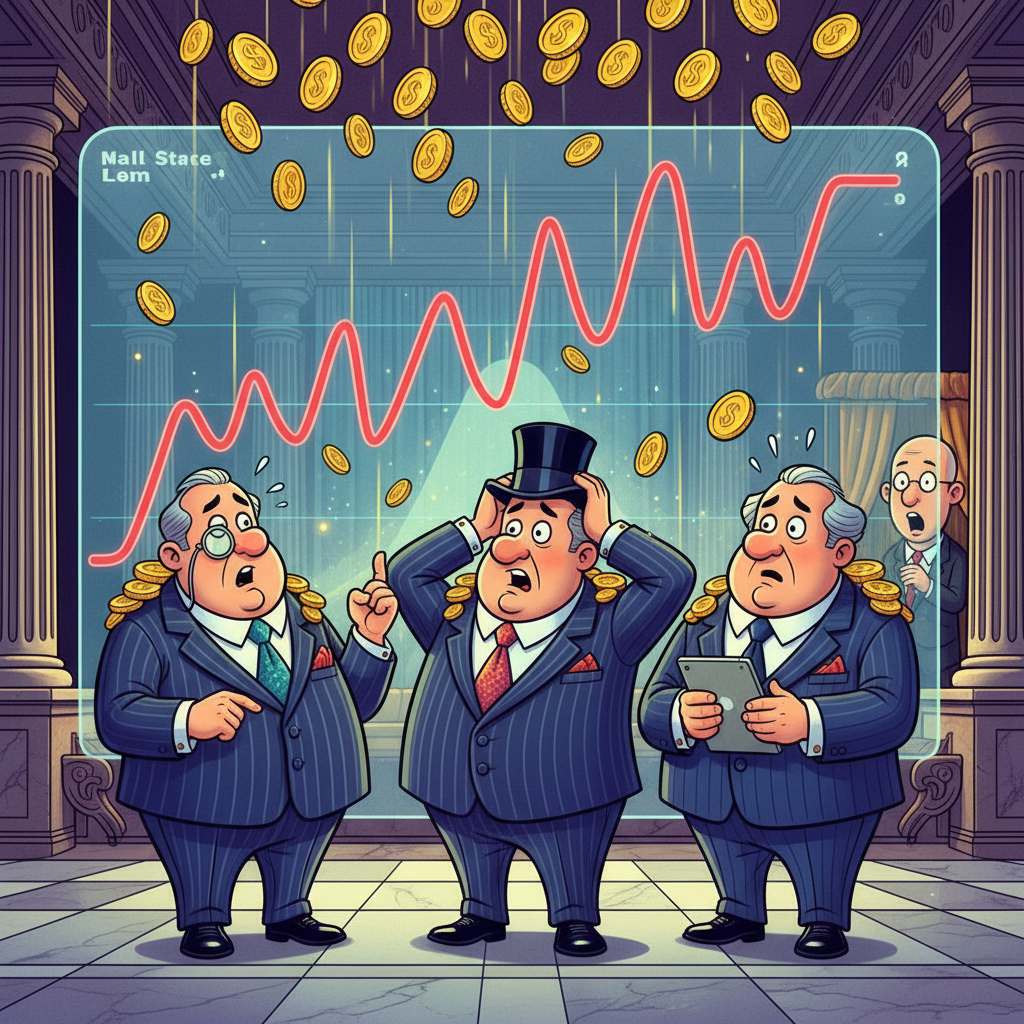
NEW YORK, NY — Financial analysts across Wall Street are openly acknowledging that the venerable 200-day moving average, long considered the bedrock of market prognostication, has been rendered functionally useless by the proliferation of exchange-traded funds (ETFs). The once-sacred metric, which historically signaled shifts in market momentum, is now described as merely a 'squiggly line that vaguely trends upwards,' according to a new, unreleased internal memo from a major investment bank.
“We used to hang our hats on that thing,” confessed Chad Kensington, Chief Market Visionary at Global Alpha Solutions, who spoke on condition of anonymity to discuss internal disillusionment. “Now, it just moves. All the time. In the direction of whatever the ETFs are doing, which is… everything. It’s like trying to predict the tide by watching a bathtub filling up.”
The issue, experts explain, stems from the sheer volume and diversity of ETFs, which now allow investors to bet on virtually any market movement, thereby smoothing out the very volatility the 200-day average was designed to detect. “It’s a victim of its own success,” stated Dr. Evelyn Reed, a quantitative analyst who prefers to be called a 'market philosopher.' “When everyone can instantly buy the dip or sell the rip through a single ticker, the market becomes a self-fulfilling prophecy of moderate, predictable movement. The average just reflects that collective, uninspired hum.”
Sources close to several major financial institutions indicate that strategists are now spending more time debating the optimal color for their 200-day moving average lines on presentations than actually interpreting their meaning. Some firms are reportedly exploring alternative indicators, including 'the number of times Elon Musk tweets about Dogecoin' and 'the collective mood of Reddit’s WallStreetBets forum,' which are said to offer 'significantly more predictive power and entertainment value.'
In related news, several prominent financial news outlets have begun offering premium subscriptions that allow users to customize the thickness and opacity of their on-screen 200-day moving averages.