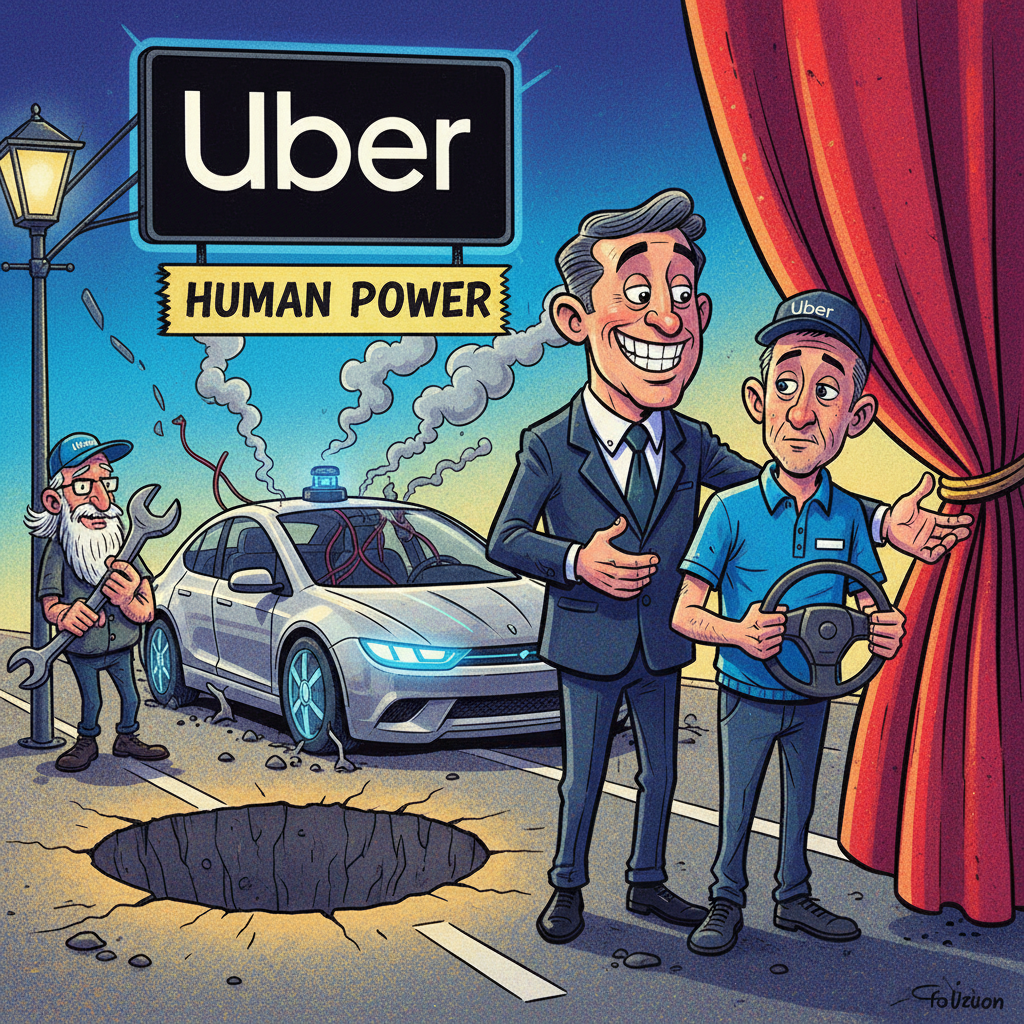
SAN FRANCISCO – In a move heralded as either visionary or deeply ironic, ride-sharing giant Uber today announced its audacious new 'Human Driver' initiative, a program designed to integrate living, breathing individuals behind the steering wheels of its vehicles. The company, which famously abandoned its own autonomous vehicle development years ago, stated the pivot was a 'natural evolution' in its quest for transportation dominance.
“We’ve been monitoring the autonomous vehicle space closely, and while the technology is impressive, we’ve identified a critical gap: the need for a sentient being capable of navigating unforeseen obstacles, engaging in light conversation, and occasionally asking if you mind if they take a slightly longer route,” stated Uber’s newly appointed Head of Human-Powered Logistics, Chad 'Wheels' Harrison. “Our research indicates that these 'human drivers' possess an unparalleled ability to adapt to dynamic environments, like, for instance, a construction detour or a sudden craving for a drive-thru burrito.”
The initiative comes years after Uber sold off its self-driving unit following a fatal accident in 2018, a decision that now sees the company scrambling to catch up with competitors like Waymo and Cruise, who have made significant strides in the driverless sector. Industry analysts, however, remain skeptical of Uber’s latest 'innovation.'
“It’s certainly… a choice,” commented Dr. Evelyn P. Thistle, a leading expert in future mobility solutions. “To spend billions on AI, only to conclude that the best AI is, in fact, a person, is a bold strategy. It’s like discovering fire, then deciding to just rub two sticks together for warmth.”
Uber confirmed that its 'Human Driver' program will also feature an unprecedented 'rating system,' allowing passengers to provide real-time feedback on their human operator’s performance, a concept the company assures is entirely novel.