
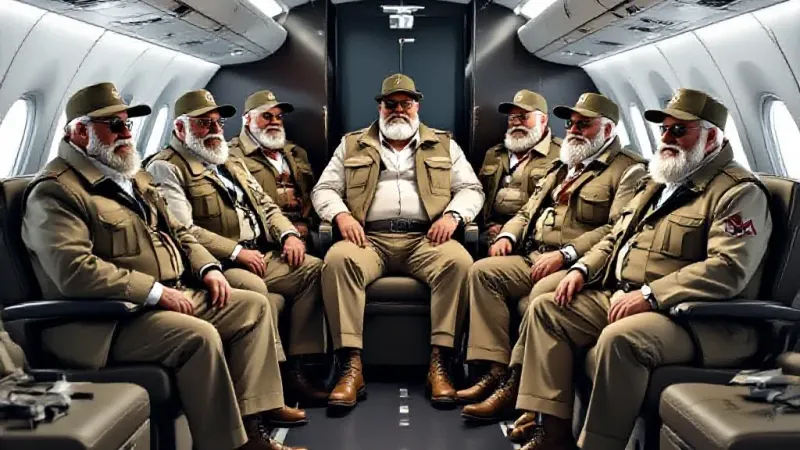
TUI Airlines, a leading European travel group, announced this week a groundbreaking new policy banning the transport of hunting trophies across its vast fleet. The move, hailed by some as a monumental win for global wildlife conservation, effectively means the airline will no longer carry the severed heads, claws, or hides of endangered species in its cargo hold. However, sources close to the announcement confirmed that the airline will continue its existing service of flying the actual trophy hunters — and their families, their luggage, and their arsenal of bespoke killing implements — directly to the designated safari zones where such trophies are procured.
“We believe in responsible tourism, and this step demonstrates our unwavering commitment to animal welfare,” gushed TUI CEO Sebastian Ebel in a press release that conspicuously omitted any mention of the carbon footprint of flying wealthy individuals halfway across the globe to shoot animals for sport. “Our passengers want to know they are flying with an airline that cares, and by not allowing dead animal parts on our planes, we are sending a clear message.” Ebel reportedly celebrated the moral victory by immediately booking a first-class ticket to a private game reserve, destination undisclosed.
Wildlife conservationists, many of whom have been fighting to save animal populations for decades, were reportedly ‘unmoved’ by the news. Dr. Anya Sharma, a veteran field biologist with the 'Institute for Cynical Ecological Studies,' pointed out that preventing the return of a deceased animal’s skull on a specific airline does not, in fact, prevent the animal’s death. 'It’s like banning the sale of souvenir t-shirts after a mass shooting but still selling tickets to the event,' Dr. Sharma stated, adjusting her binoculars. 'The real impact on conservation comes from habitat destruction, climate change, and the rampant commercialization of nature — all of which TUI, through its extensive global operations, contributes to on a daily basis.'
Meanwhile, trophy hunters have reportedly begun exploring alternative shipping methods, including private charters and postal services, ensuring their prized severed heads arrive home just as safely, albeit perhaps a few days later. The majestic beasts of the savanna, unaware of the nuanced logistics of international freight, continued to face the same existential threats, with or without TUI’s public relations triumph.
The only real change is now the hunters will have to pay an extra few hundred dollars to ship their blood-soaked keepsakes, a cost they will surely pass on to their accountants as a ‘business expense.’