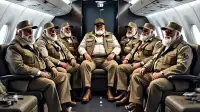

SYDNEY — The Australian government today announced the successful launch of a "pioneering" program to hand-vaccinate 5,000 wild penguins, describing the initiative as a "monumental stride" in wildlife conservation and a benchmark for national health campaigns. The ambitious program, which involved hundreds of highly trained conservationists, specialized veterinarians, and an undisclosed number of tranquilizer darts, reportedly achieved an almost 100% compliance rate. This unparalleled success was largely attributed to the penguins' inherent inability to refuse treatment, inquire about side effects, or demand a second opinion on the necessity of the jab.
"This truly demonstrates what we can achieve when we prioritize a clear, definable population with minimal bureaucratic hurdles and an absolute aversion to social media," stated Minister for Aquatic Avian Wellness, Penelope Fetherington, at a press conference featuring a carefully posed, recently vaccinated Little Penguin named 'Skipper'. Fetherington glowed as she highlighted the meticulous logistics, from custom-fitted nets to a bespoke vaccine delivery system designed to minimize stress for the flightless birds. "The dedication shown by our teams, often working knee-deep in guano and braving the occasional beak-peck, is a testament to our unwavering commitment to every single, adorable, feather-flanked resident of this nation." When pressed about similar efficiency in human healthcare rollouts, particularly concerning an ongoing doctors' strike and record-long emergency room wait times, Fetherington quickly pivoted, citing "complex logistical challenges" and "unpredictable public sentiment" as insurmountable obstacles in the human realm.
An internal memo, allegedly leaked from the Department of Human Services and obtained by Hambry, revealed that the penguin program's efficiency metrics far surpassed any recent human health initiative. "Turns out, you don't need patient consent forms, insurance pre-approvals, or even a basic understanding of English when your patient is a two-foot-tall bird whose primary concern is fresh fish," read the memo. Dr. Liam 'Fish' Finnegan, an epidemiologist with the newly formed Institute for Avian-Human Priority Studies, commented, "It’s a clear case of resource allocation. Penguins don't complain about wait times, they don't sue for malpractice, and they certainly don't start Facebook groups about vaccine conspiracies. From a purely administrative perspective, they're the ideal patient."
The success has reportedly sparked discussions in Canberra about expanding the program, with sources suggesting future initiatives could include free dental for koalas and guaranteed housing for wombats, before any further investments in the nation's human emergency rooms.