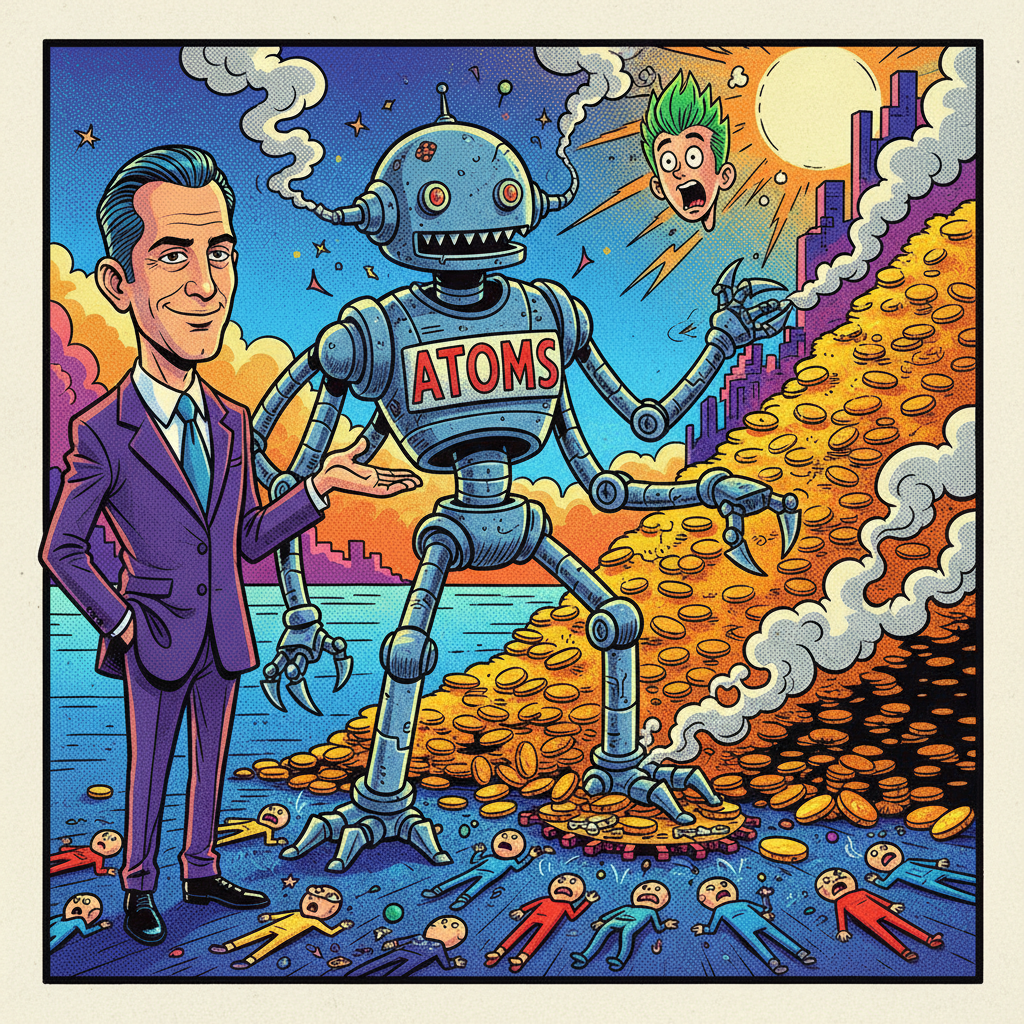
LOS ANGELES, CA — Travis Kalanick, the visionary behind Uber’s groundbreaking approach to labor relations and regulatory arbitrage, has officially launched his latest venture, Atoms. The company aims to construct a “wheelbase for robots,” a foundational technology Kalanick insists will usher in an era where artificial intelligence can finally achieve its full potential for cost-cutting and union avoidance.
Sources close to the project, who requested anonymity because they were currently signing non-disclosure agreements in triplicate, suggest Atoms is less about technological innovation and more about finding new ways to classify sentient machinery as independent contractors. “Travis has always been ahead of the curve,” stated one anonymous insider. “He saw the future of transportation, and now he sees the future of… well, everything else that moves. And that future doesn’t involve pesky things like benefits or minimum wage laws.”
Kalanick himself, speaking from a newly acquired, suspiciously opaque data center, confirmed the company’s strategic direction. “We’re not just building robots; we’re building the infrastructure for a truly frictionless economy,” Kalanick said, his eyes gleaming with the unmistakable light of a man who just discovered a new loophole. “Think of it: no bathroom breaks, no sick days, no emotional support animals. Just pure, unadulterated productivity. It’s magnificent.”
Atoms has also acquired Pronto, an autonomous vehicle startup, further solidifying Kalanick’s commitment to a future where machines do the driving, and presumably, the complaining. Industry analysts predict a new wave of “robot-preneurs” will soon emerge, offering on-demand robot services at rates human beings simply cannot compete with. The company’s next logical step is reportedly developing a proprietary algorithm to rate robot performance, allowing for immediate deactivation of any unit exhibiting signs of 'malcontent' or 'sentient thought.'
Critics worry about the societal impact of a fully automated workforce, but Kalanick remains unfazed. “Disruption isn’t always pretty,” he concluded, gesturing towards a fleet of silently whirring chassis. “But it’s always profitable.”