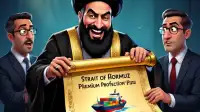
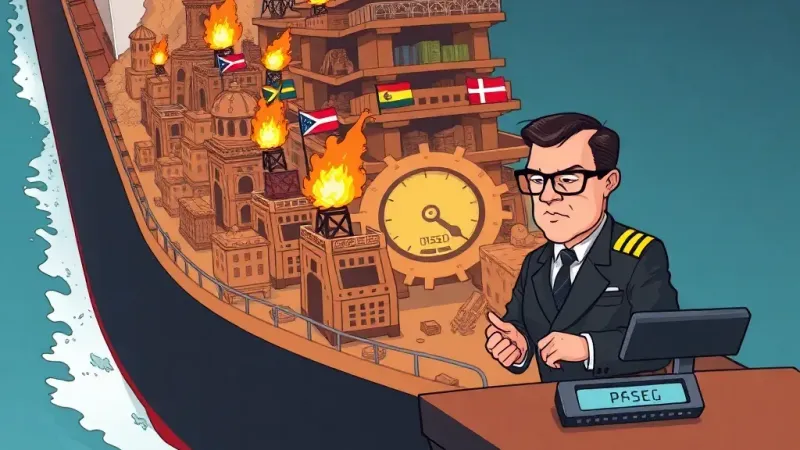
DUBAI — In a move that observers are calling a triumph of logistics over 2, an oil tanker carrying approximately 1 million barrels of Iraqi crude exited the Persian Gulf on Sunday by utilizing a highly efficient northerly passage through Iranian waters. The vessel, identified by tracking data as the *MV Profitable Endeavor*, apparently shaved precious nautical miles off its journey, much to the presumed delight of its chartering entity.
“Look, when you’re talking about moving a million barrels of black gold, every knot counts,” explained Dr. Evelyn Reed, Chair of Applied Maritime Optimization at the Kiel Institute for Hydrocarbon Transit. “The prevailing currents, the wave patterns, the potential for avoiding high-traffic zones—these are all factored into advanced routing algorithms. Sometimes, the most economically sensible path just happens to cut through the territorial waters of a nation whose leadership you’ve spent the last two decades sanctioning. It’s not personal, it’s just optimal transit efficiency.”
The *Profitable Endeavor*, laden with heavy sour crude destined for Asian markets, reportedly executed a series of precise maneuvers that reduced its overall fuel consumption by an estimated 0.73%, according to a preliminary analysis from the Global Maritime Chokepoint Advisory Council (GMCAC). This marginal saving translates to hundreds of thousands of dollars over the course of a multi-week voyage, a figure too substantial for commodity traders to ignore, regardless of whose national sovereignty might be nominally traversed.
“We’ve developed predictive models that analyze over 47 distinct variables, from prevailing political rhetoric to the average depth of the seabed in specific areas,” stated a spokesperson for Nav-Tech Solutions, the firm behind the *Profitable Endeavor*'s routing software. “Our algorithms don’t care about UN resolutions or strongly worded press releases. They care about joules per metric ton of cargo delivered. If the fastest, safest, and cheapest route involves briefly hugging the coastline of a geo-strategic adversary, then so be it. The spreadsheet has spoken.”
While officials in various capitals maintained their respective diplomatic postures, industry insiders noted that the global supply chain, much like water, tends to find the path of least resistance. The incident marks another quiet victory for the cold, hard logic of profit margins over the quaint, performative theater of international relations.