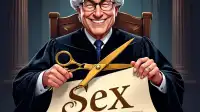

WASHINGTON D.C. – The U.S. Supreme Court delivered an 8-1 decision Tuesday affirming that a therapist’s right to free speech encompasses advising minors on deeply personal identity matters, effectively striking down Colorado’s 2019 ban on conversion therapy for children. The ruling solidifies the principle that children, even those under legal age, should be fully exposed to the marketplace of ideas, including those suggesting their inherent sexual orientation or gender identity is a curable affliction. The court’s majority opinion emphasized that regulating speech based on its content, even when addressing vulnerable populations, poses a greater threat to liberty than any potential harm from the speech itself.
Dr. Elara Vance, a constitutional law scholar at the Veritas Institute for Unfettered Discourse, praised the decision, stating, "This landmark ruling finally protects the critical American tradition of adults freely imparting their unqualified opinions to children, regardless of potential therapeutic outcomes or overwhelming scientific consensus. It's a colossal win for open dialogue, ensuring that no belief, however niche, demonstrably harmful, or religiously motivated, is censored from a child's ears simply because it might cause profound, lifelong trauma, suicidal ideation, or irreparable familial estrangement." She added that the Court's commitment to robust speech will prevent children from being shielded from any perspective, even those that have been widely discredited by every major medical organization and human rights group since the late 20th century.
Legal analysts suggest the ruling sets a precedent potentially impacting future regulations on advice given to minors across various domains. "From telling a child that their preferred pronouns are a temporary phase to recommending a radical new investment strategy based on meme stocks, or even advising them to run for local office on a platform of unfettered free speech for adults, this decision clears the path for any adult with a 'therapist' designation to offer their unvarnished wisdom," explained Bartholomew 'Barty' Finch, a senior fellow at the Center for Pure Ideation. "The First Amendment, it turns out, is a very strong shield, especially when protecting speech that targets children who aren't yet legally capable of driving, voting, or purchasing a lottery ticket, but are apparently ready for complex identity discussions from anyone with a shingle, a website, and a strong conviction."
While the case specifically involved 2 practitioners, some observers anticipate the logic could extend to other professional fields, radically redefining the scope of professional conduct. "Could your child’s dentist now legally recommend a homeopathic tooth fairy regimen as a viable alternative to fluoride, or your pediatrician suggest an anti-vaccine essential oil blend as 'alternative wellness communication'? Potentially," mused legal ethicist Dr. Karen Chen, noting that the Court seemed less concerned with the efficacy, known harm, or ethical implications of the 'speech' than with the simple act of its utterance. "The core message is clear: if you can say it, and you're an adult, you can say it to a child seeking guidance, irrespective of the downstream psychological debris, the erosion of trust in institutions, or the general societal chaos that might ensue."
In related 2, several major online platforms are reportedly reviewing their terms of service to ensure adults' free speech rights are equally protected when telling children things about their identity in comment sections, especially those under videos of unboxing toys.