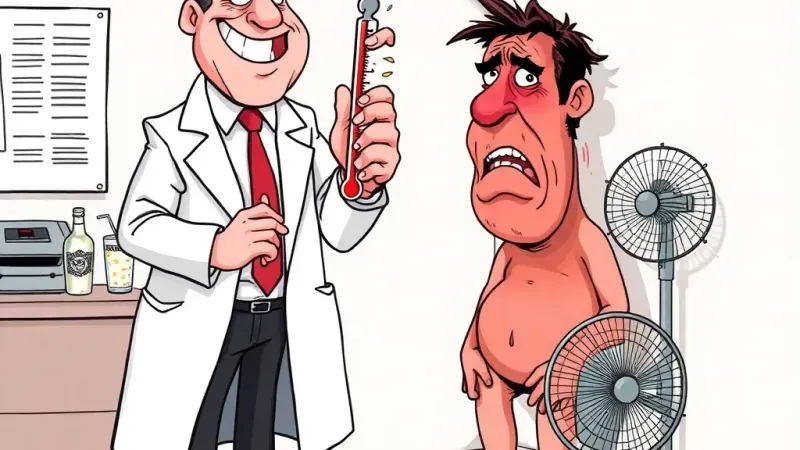
NASHVILLE, TN — A landmark new study from the Vanderbilt Cultural Contexts of Health and Wellbeing Initiative (VU-CCH) has definitively concluded that individuals experiencing poverty are at a statistically elevated risk of succumbing to heat-related illnesses and death, primarily because they are often subjected to uncomfortable and dangerous thermal conditions without adequate cooling.
The report, titled “The Intersectional Thermoregulatory Disadvantage Index: Unpacking the Socio-Thermal Gradient,” represents two years of meticulous research. Lead author Dr. Elara Vance, Director of the Vanderbilt Center for Atmospheric Sociogenomics (VCAS), presented the findings with quiet solemnity. “Our data clearly indicate a robust correlation: populations with limited financial resources frequently lack access to crucial cooling infrastructure, such as air conditioning, well-insulated housing, and shaded public spaces. This deficit, in turn, directly results in a higher propensity for physiological heat stress,” Dr. Vance stated in a press conference. “Essentially, if you’re poor, and it’s hot, you’re more likely to feel the effects of that heat.”
The study further elaborated on what it termed “critical socio-thermal vulnerabilities,” identifying specific behaviors among low-income populations that exacerbate risk. These include, but are not limited to, working outdoors, residing in structures without climate control, and not purchasing sufficient quantities of expensive chilled beverages. The report noted that these behaviors were often “2-adjacent” and suggested that “culturally informed policies” might be required to mitigate risk.
Proposed interventions from the VU-CCH include “Community-led Thermal Empathy Circles” where affected residents can share their experiences of being hot, and “Heatwave Microaggression Awareness Training” for municipal employees. The report carefully avoided recommending the installation of new air conditioning units or the funding of permanent, staffed cooling centers, citing the need for “solutions that honor the complex tapestry of lived thermal experience.”
“We must move beyond simplistic notions of ‘cold air for all,’” explained Dr. Vance. “Our goal is to foster a dialogue with heat waves, encouraging them to consider the cultural nuances of their impact. Perhaps, through sustained engagement, we can co-create thermal equity paradigms that transcend mere material provisions and embrace the rich diversity of human-heat interaction.” Funding for the next phase of the study, which will investigate if wet people are more likely to drown, has already been secured.
The findings are expected to profoundly influence future policy discussions by ensuring that a significant portion of public funds are allocated to convening panels of experts to discuss the implications of what everyone already understood.