
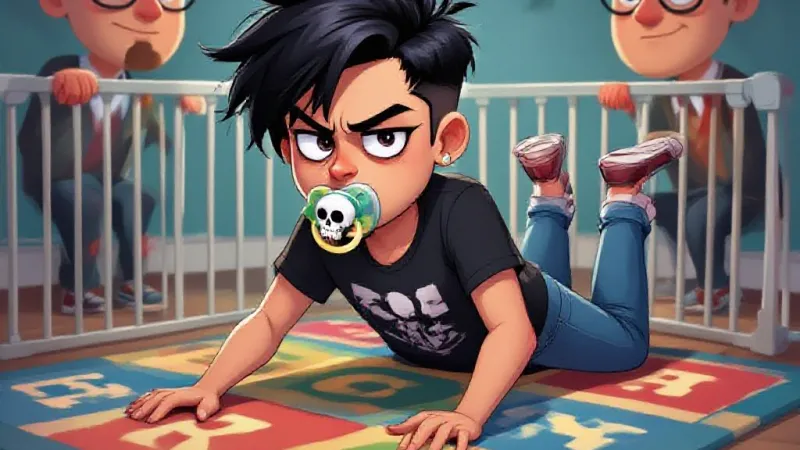
WASHINGTON D.C. — A groundbreaking study released today by the Institute for Perpetual Adolescence Studies (IPAS) confirms that the so-called "emo revival" isn't a cultural resurgence, but rather a collective delay in maturation for a significant portion of the population. The report, titled "Forever Young (And Angsty): The Emo Lifestyle as Extended Childhood," concludes that fans of the genre, primarily those who embraced it in their formative years, are exhibiting "unprecedented levels of sustained emotional stasis."
"Our data indicates a clear correlation between consistent engagement with emo music post-age 25 and a reluctance to engage with adult responsibilities like stable romantic relationships, homeownership, or even fully diversifying one's Spotify playlists," stated Dr. Kendra Vance, lead researcher at IPAS, during a press conference held ironically in a dimly lit basement bar. "It's not a revival; it's an uninterrupted performance of their most angsty self, decades later. They never actually grew out of it, they just got better jobs to afford more elaborate band merch."
The study tracked thousands of individuals from their initial emo phase through their late 30s and early 40s, noting key behavioral patterns. Participants were found to still prefer discussing deep, existential anxieties over mundane adult topics like mortgage rates or the optimal temperature for dishwasher cycles. Many reported feeling "misunderstood" by their peers who had moved on to what researchers termed "boring adult things." One subject, a 38-year-old marketing executive, reportedly still refers to his ex-partner from 2007 as "the one who got away and ruined everything," despite being happily married with two children.
Further findings revealed that the "revival" phenomenon is heavily amplified by online media platforms, which provide a constant feedback loop for nostalgia-driven content. "Websites catering to this demographic have effectively created an echo chamber where sustained adolescence is not only tolerated but celebrated as 'authentic' or 'timeless'," Dr. Vance added, scrolling through a listicle titled "17 Reasons Why Your Mid-Life Crisis Still Sounds Like My Chemical Romance." "It's less a cultural wave and more a prolonged, collective tantrum against the inevitable march of time and the quiet expectation to, you know, just calm down a little bit."
The report recommends that individuals experiencing these symptoms consider engaging with new musical genres, attempting to find joy in things that don't involve eyeliner, or perhaps, for a truly radical act of defiance, doing their taxes without complaining about the system. The study concludes that the most rebellious act an emo fan can undertake today is to simply acknowledge that life doesn't always have to feel like a high school assembly hall.