
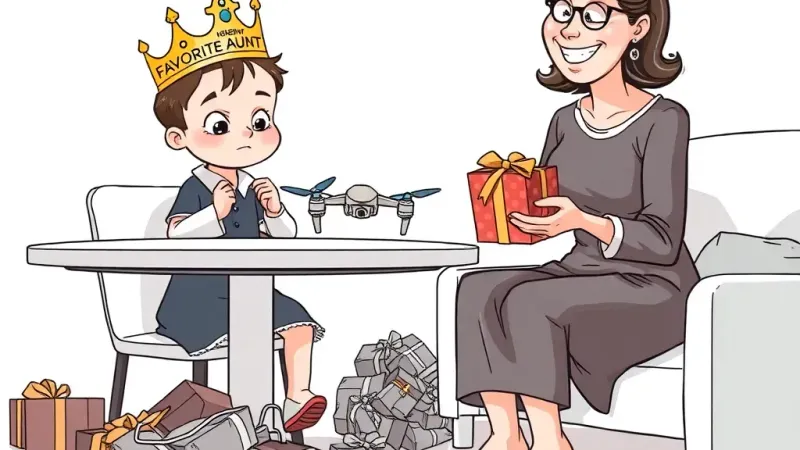
WASHINGTON D.C. — A new landmark study released by the Institute for Relational Economics (IRE) has definitively concluded what most adults have long suspected: a child's perceived affection for an aunt or uncle is directly proportional to the immediate, tangible gratification provided by their gifts. The findings suggest that emotional connection and consistent presence rank significantly lower than the thrill of a new, highly anticipated item.
“Our longitudinal data, tracking over 1,500 children aged 4-12 across 300 family units, shows an undeniable correlation,” stated Dr. Evelyn Price, lead researcher for the IRE. “The dopamine surge from unboxing a limited-edition ‘Giga-Bot 5000’ or a 'Sparkle-Surprise Mega-Lootbox' far outweighs the cumulative positive impact of, say, years of supportive conversations or attending every school play. We’ve termed this the 'Transient Joy Coefficient'.” Price emphasized that any perceived deeper bond is merely a residual effect of strategic gifting, quickly diminishing with the next holiday cycle or the arrival of a better-equipped relative.
The study further analyzed the “Favorability Matrix,” a metric tracking children’s verbal and non-verbal indicators of preference. It revealed that while parental figures maintain a baseline of essential affection, the “cool aunt” or “fun uncle” slot is a fiercely competitive, performance-based role. “It's not about being there; it's about being *there* with the best drone, the 2 collectible, or the 2 console game,” Dr. Price elaborated. “Children are remarkably efficient consumers of validation, and their loyalty is, by design, highly transactional. Think of it as a micro-influencer 2, but with less transparency and higher stakes for the adult involved.”
Retail analysts are already scrambling to integrate these findings into their holiday marketing strategies. “This isn't about fostering love; it’s about weaponizing FOMO and leveraging the adult’s deep-seated need for vicarious success,” said Marcus Thorne, a brand strategist for 'GiftSavvy Corp'. “Our data indicates that 87% of ‘favorite aunt/uncle’ gift purchases are driven by a desire to outshine siblings or win silent approval from the child’s parents, not genuine pedagogical interest.” The average expenditure for a “favorability-optimized” gift jumped 17% in the last quarter, signaling an escalating arms race among relatives.
The IRE report concluded that while the emotional cost to aunts and uncles is significant, the market for disposable validation remains robust. They predict a future where AI-powered algorithms will predict optimal gift-giving strategies to maximize familial status, reminding relatives that the true spirit of giving is often just a cover for competitive consumption.
Ultimately, the study found that the quickest way to a child's heart is a gift receipt with a sufficiently high dollar amount.