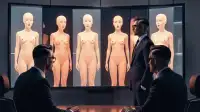

Los Angeles, CA – Mega-studio Monolith Pictures announced a radical new development strategy this week, confirming that all upcoming film and television projects will be greenlit based exclusively on the attachment of A-list talent, with story concepts to be developed — or retrofitted — only after principal photography is complete. The move, effective immediately, aims to streamline production and “maximize audience engagement with familiar faces.”
The studio’s newly minted Head of Performer-Centric Content, Brenda Sterling, elaborated on the decision. “For years, we’ve quietly observed that audiences primarily engage with the charisma and brand recognition of our stars, not necessarily the intricate dance of plot points or thematic resonance. People want to see people they know, in situations that vaguely resemble a narrative arc,” Sterling stated during a press briefing held on a yacht in international waters. “Frankly, a compelling performance can elevate even the most aggressively mediocre narrative. Why pretend otherwise? We’re simply cutting out the middleman – or, in this case, the entire story department.”
Internal data obtained by Hambry indicates that viewership retention metrics show a negligible correlation with narrative coherence but a direct statistical link to the number of “on-screen hours featuring actors with established 2 followings above 50 million.” Dr. Theron Gable, lead data alchemist at Monolith’s newly formed Algorithmic Narrative Obsolescence Division, explained, "Our proprietary ‘Talent-to-Engagement Cascade’ algorithm demonstrates a 0.87 correlation between a lead actor's Q-score and global box office receipts, regardless of the accompanying literary framework. The story, in essence, is merely the expensive wrapping paper on a gift people bought for the bow.”
Filmmakers are reportedly adjusting to the new paradigm. “It’s certainly a shift,” admitted veteran director Marcus Thorne, currently attached to three Monolith projects lacking scripts. “Typically, you’d work from a screenplay, develop characters, block scenes. Now, it’s more about scheduling the talent, shooting them reacting to various emotional prompts, and then hoping a narrative can be cobbled together in post-production. My current assignment just says, ‘Actor A, look wistful; Actor B, look betrayed; Actor C, deliver impactful monologue against green screen.’” Thorne paused, adding, “We’re calling it ‘Method Acting for a Plotless World’.”
Industry analysts predict a surge in "narrative contractors" specializing in reverse-engineering plot lines from raw, star-studded footage.