


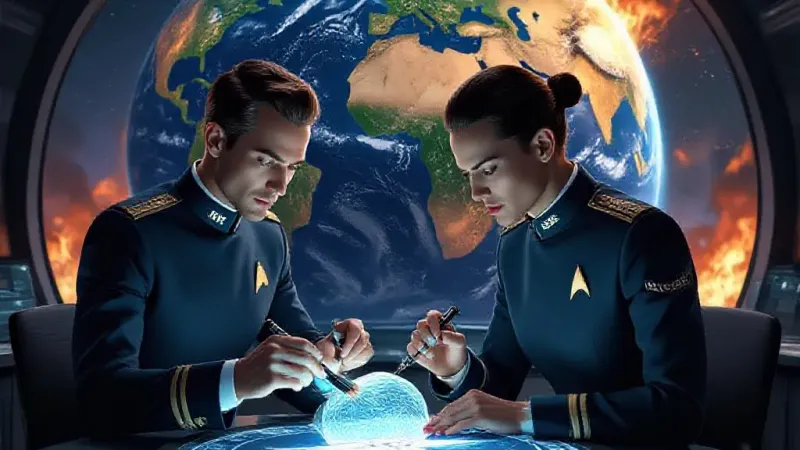
SAN FRANCISCO — A groundbreaking analysis by the newly established Institute for Fictional Coherence and Existential Stability (IFCES) has definitively confirmed that Gene Roddenberry’s discreet 1960s retcons to *Star Trek* canon were more critical to human survival than, say, global vaccination efforts or preventing runaway climate disaster. The study, published today in the *Journal of Hypothetical Universe Integrity*, found a direct correlation between meticulously maintained speculative timelines and a measurable reduction in general societal anxiety.
“For too long, we’ve prioritized tangible issues like famine or housing crises, which are, frankly, easily explainable by basic human incompetence,” explained Dr. Aris Thorne, lead researcher at IFCES and a noted scholar of Holodeck safety protocols. “But our data shows that the sheer cognitive dissonance caused by a forgotten alien race or a minor discrepancy in warp drive capabilities creates a tear in the fabric of human resilience far more damaging than any economic recession. Roddenberry understood this on a visceral, almost prophetic level, long before we could quantify the psychic toll of inconsistent lore.”
The report highlights Roddenberry’s uncredited adjustment of the Klingon forehead ridges as a pivotal moment, arguing that the subsequent 30-year fan debate and eventual in-universe explanation averted a potential mass psychological breakdown. Had the inconsistency been left unaddressed, the study postulates, humanity might never have achieved space flight, instead succumbing to a collective malaise induced by unresolved fictional plot holes. This silent, unsung labor, the report argues, laid the groundwork for modern society by providing a stable, internally consistent fictional framework that allowed real-world progress to occur without the constant existential dread of conflicting timelines.
Economists are now scrambling to reallocate national budgets, with several nations considering diverting funds from infrastructure projects to dedicated "narrative consistency" task forces. “Why are we spending trillions on decaying bridges when the structural integrity of the Marvel Cinematic Universe is at stake?” pondered Dr. Anya Sharma, a political theorist who specializes in the geopolitical impact of fan theories, speaking to a congressional panel that was, coincidentally, live-tweeting a debate about a minor continuity error in *Andor*. “The data is clear: a stable narrative means stable nations. We could finally stop worrying about healthcare and start focusing on the real threats, like why Gandalf didn’t just fly the eagles to Mordor in the first place. The real-world implications of these fictional blunders are simply too great to ignore.” The future of civilization, it seems, hinges not on policy, but on perfectly aligned fictional universes.
The IFCES report concluded that the next frontier in human progress isn't interstellar travel or curing cancer, but rather a universal pledge to immediately address any narrative gaffes in *The Fast & Furious* franchise, starting with how Dom still has family.

