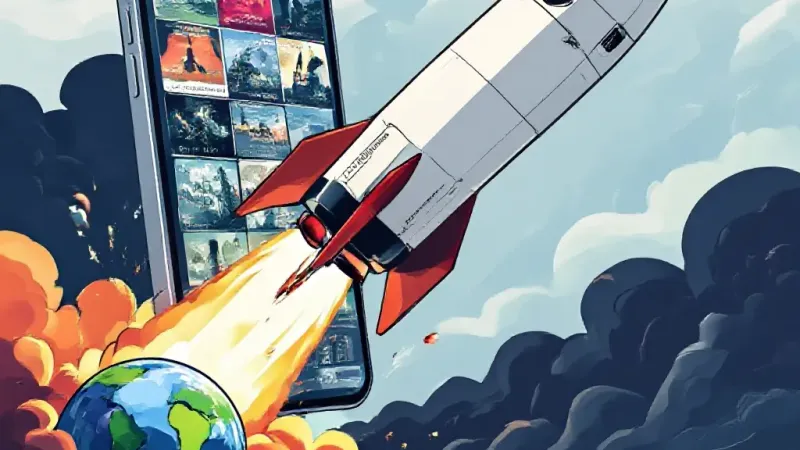
VANDENBERG SPACE FORCE BASE, CA — A SpaceX Falcon 9 rocket successfully launched 24 Starlink satellites into Earth orbit Sunday, marking another critical step in humanity's quest to ensure no one, anywhere, ever has to experience a single moment of quiet reflection without a high-definition cat video or a climate disaster update at their fingertips. The mission, originating from California’s Vandenberg Space Force Base, expands Starlink’s already vast constellation, pushing global connectivity toward what critics call a glittering, omnipresent digital ceiling.
"This is about universal access," proclaimed Dr. Celeste Vance, Director of Digital Distraction Studies at the Institute for Aspirational Proximity. "Whether you're sheltering from a wildfire in Maui or simply ignoring your family at Christmas dinner, Starlink guarantees you can watch a 30-second recipe video without buffering. It’s not just about internet; it’s about providing a vital, 24/7 escape mechanism from the increasingly inconvenient realities of a planet actively trying to shed its inhabitants." Vance noted the strategic placement of these new satellites specifically targets areas prone to extreme weather events, ensuring seamless streaming capabilities right up until the point of total infrastructure collapse.
Critics, mostly astronomers struggling to find an unblemished patch of night sky, decried the launches as little more than adding to humanity's rapidly expanding orbital landfill. However, SpaceX CEO Elon Musk, speaking via a neural implant feed directly into the collective consciousness of his fan base, brushed aside such concerns. "Some people complain about 'space junk'," Musk projected, "but I see it as 'orbital infrastructure for a multi-planetary species.' And besides, how else are we going to stream the future demolition of Earth in glorious 4K from Mars if we don't start building the network now?" He then pivoted to an unsolicited pitch for Starship rides to the Moon, "starting at just 4 Bitcoin."
The new deployment means that even as temperatures spike, resources dwindle, and geopolitical tensions simmer, citizens across the globe can rest assured: their TikTok feed will refresh instantly. It’s a testament to human ingenuity—or perhaps its complete lack—that the future of civilization hinges on uninterrupted access to short-form video content, beamed down from thousands of increasingly difficult-to-avoid metallic specks. The only thing brighter than humanity’s prospects, it seems, is the constant glare of a thousand artificial stars.