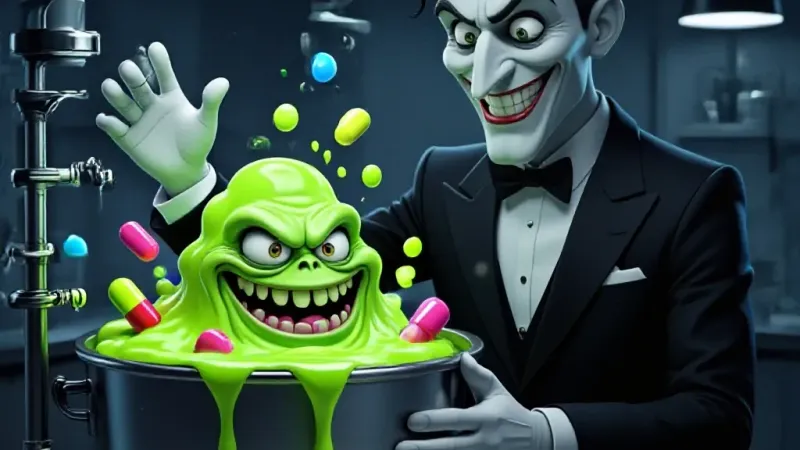
A groundbreaking new study published this week revealed a shocking truth: consuming artificial sweeteners might not be a purely benign experience for the human body. Researchers, after decades of observation, were reportedly "taken aback" to find that the synthetic compounds designed to trick taste buds could, in fact, interact with gut bacteria, leading to a reduction in beneficial microbes and overall microbial diversity, particularly when combined with common medications.
"We thought we had a pretty good handle on things," admitted Dr. Brenda Thorne, lead researcher for the Institute for Obvious Health Discoveries (IOHD), while staring blankly at a bottle of diet soda. "For years, we operated under the assumption that if it tasted vaguely like sugar but had zero calories, it was basically just magic air. Who knew that introducing industrial-grade chemicals into a complex biological system might have... *effects*?"
The study, which meticulously tested 39 different sweeteners, focused particular alarm on the combination of one popular artificial sweetener and a widely prescribed antidepressant. The resulting "microbial wasteland," as one anonymous lab tech described it, effectively turned the gut biome into a silent, suffering protest against late-stage capitalism. Industry leaders, meanwhile, expressed profound sorrow at the unexpected findings. "This is truly a sad day for the 'no-consequence indulgence' sector," stated Aspartame Corporation CEO, Hugh Betcha, from his yacht, "The Gut Wrecker III." "Our chemists worked tirelessly to ensure these products provided maximum profit with minimum consumer awareness. To learn they might actually *do* something to the body is a complete paradigm shift."
Regulators, who initially approved these sweeteners with minimal long-term human testing, are now reportedly launching a "rigorous re-evaluation process" that will involve forming a committee, hiring consultants, and eventually concluding that more studies are needed. Meanwhile, the public, already grappling with an onslaught of mental health crises and digestive issues, was reportedly "not at all surprised" by the news, with millions simultaneously muttering, "Yeah, no shit," while scrolling through TikTok.
The human body, it seems, remains stubbornly resistant to the idea that science can simply declare chemicals "food" without consequence, continuing its inconvenient rebellion against corporate innovation one dying gut microbe at a time.