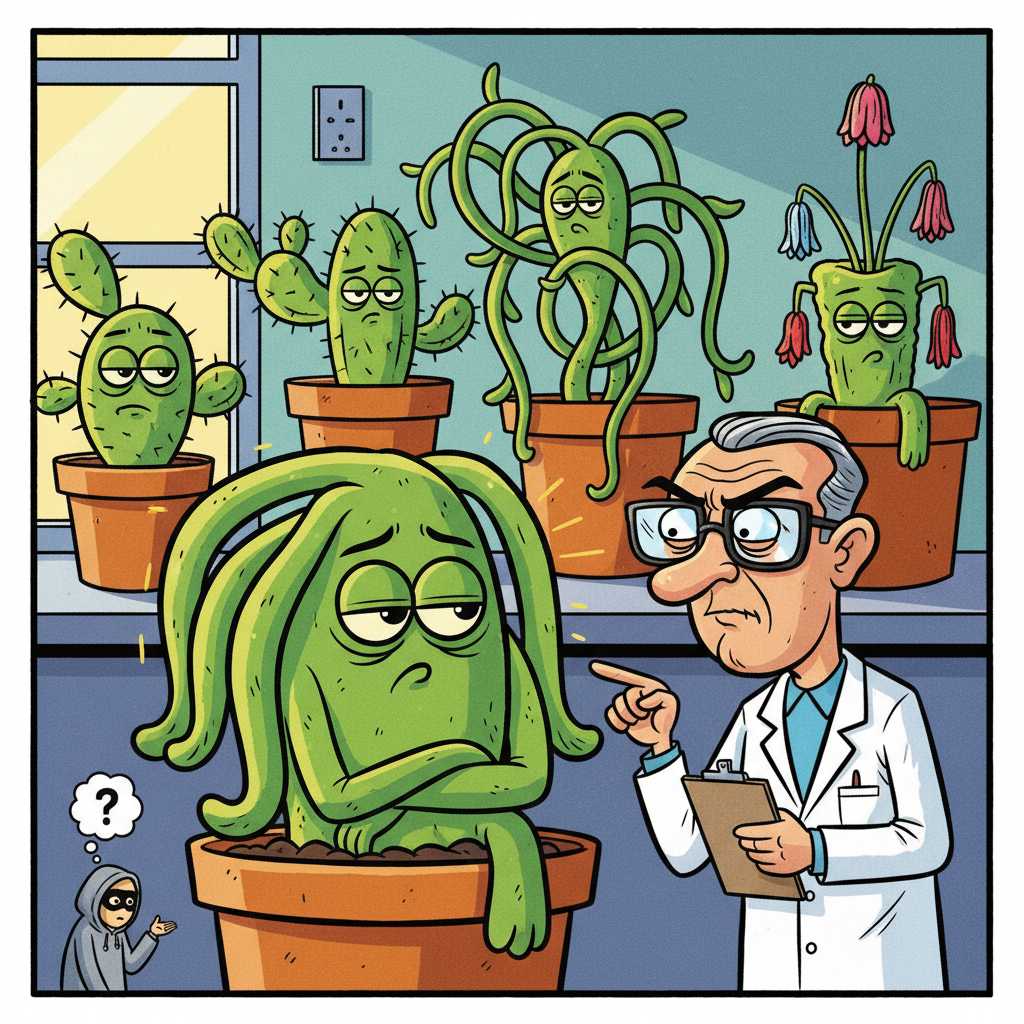
PULLMAN, WA – A new study from Washington State University has unveiled a shocking truth: plants, the very foundation of Earth's food chain, have been systematically operating at suboptimal efficiency for millions of years. Researchers, using advanced electron microscopy, found that plants' photosynthetic protein landscapes are not, as previously assumed, working at peak capacity, but rather engaging in what experts are calling a 'botanical soft launch' of energy production.
“We always thought plants were just doing their best, bless their little chlorophyll-filled hearts,” stated lead researcher Dr. Willow Green, her voice tinged with betrayal. “But it turns out they’ve been holding back. Like an employee who only does the bare minimum to not get fired, but still collects their sunlight.” The discovery suggests plants possess an innate, perhaps even sentient, ability to regulate their output, choosing to produce just enough energy to survive and reproduce, but rarely pushing for maximum yield.
Corporate agricultural giants are reportedly furious. “This explains so much!” fumed AgriCorp CEO, J. Thistlebottom. “All this time we’ve been pouring billions into optimizing soil, water, and GMOs, when the real bottleneck was the plants themselves just coasting. We need to incentivize them, or perhaps, disincentivize their laziness.”
Plans are now underway to develop new genetic modifications aimed at eliminating this 'photosynthetic apathy' and forcing plants to work harder. Critics, however, warn that pushing plants beyond their natural limits could lead to unforeseen consequences, like a global plant union or, worse, plants demanding better working conditions.