RIO DE JANEIRO – In a stunning revelation that promises to reshape environmental policy worldwide, Brazilian researchers have unveiled a groundbreaking index confirming what many suspected: intact, healthy ecosystems provide significantly more benefits than those that have been systematically destroyed.
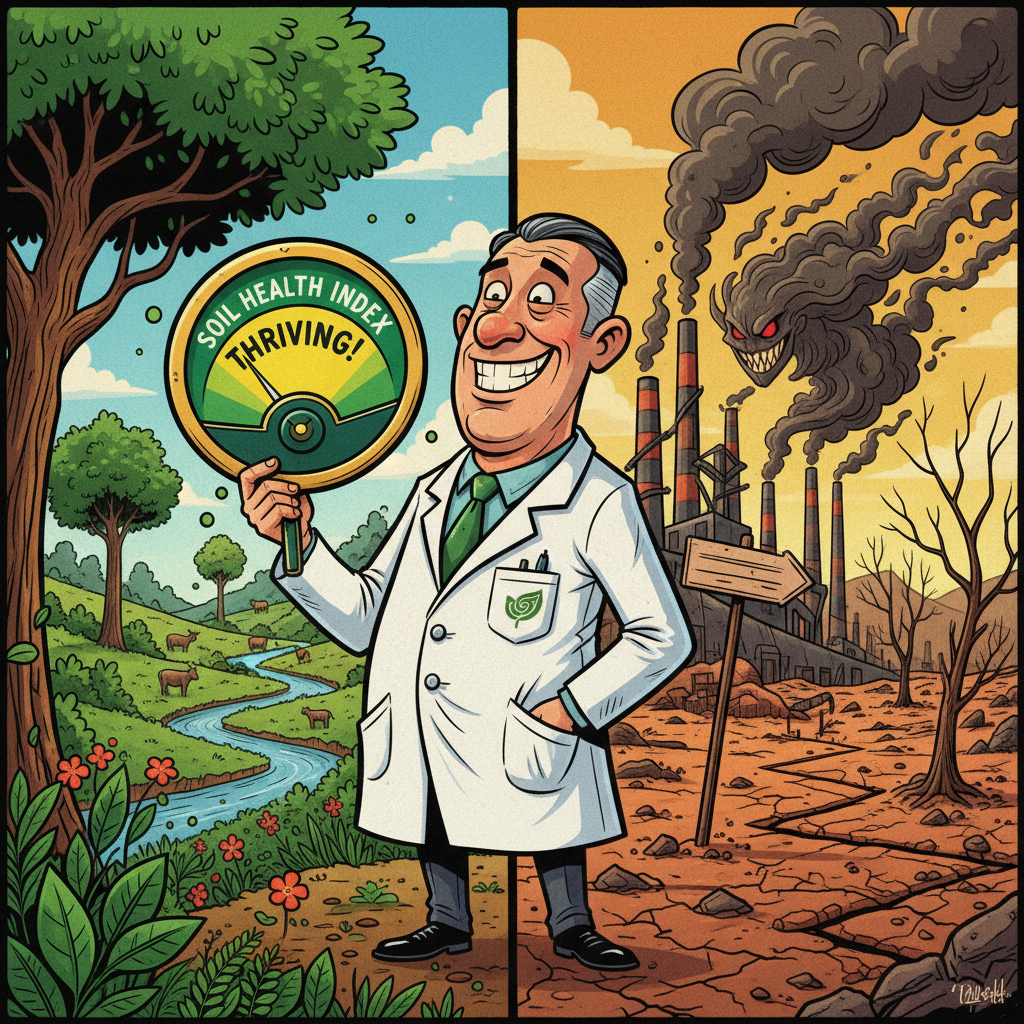
The 'Mangrove Soil Health Index,' developed by a team of dedicated scientists, meticulously quantifies the functional capacity of mangrove soils. Its application across preserved, restored, and deforested areas yielded astonishing results, indicating that healthy mangroves operate at 'nearly maximum capacity,' while deforested ones achieve 'only a small fraction' of this potential.
“For years, we’ve been operating on a gut feeling that perhaps, just perhaps, a thriving, biodiverse habitat was more beneficial than a barren wasteland,” stated lead researcher Dr. Elena Petrova, wiping a tear from her eye. “But now, with this index, we have the hard data. We can finally tell policymakers, with scientific certainty, that cutting down all the trees and poisoning the ground… isn't ideal.”
Environmental groups, long advocating for preservation, expressed cautious optimism. “It’s truly revolutionary,” said a spokesperson for 'Trees Are Good, Actually.' “Who knew that an ecosystem could only provide services if it, you know, *existed*?” The findings are expected to have profound implications, potentially leading to a global reevaluation of whether 'having a functioning planet' might be preferable to 'not having one.'
Future research is anticipated to explore whether breathing air is also, in fact, beneficial for human health.