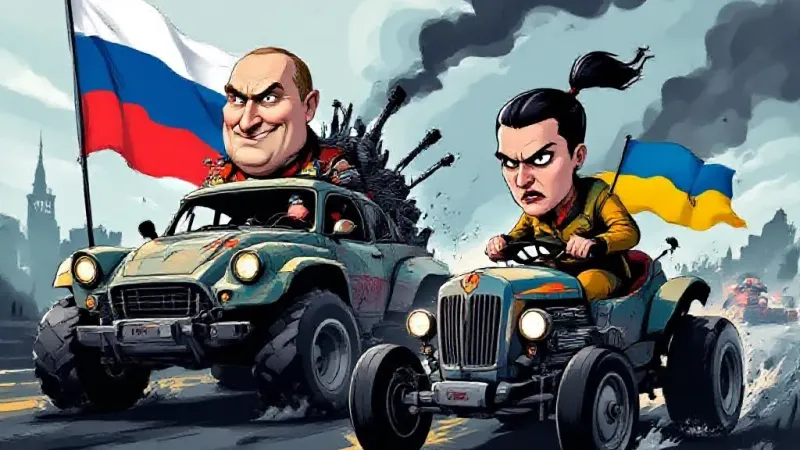
KYIV / MOSCOW — As 2026 enters its most decisive phase, Russia and Ukraine have reported unprecedented levels of mutual devastation, with both sides celebrating record-setting “strategic impact exchanges.” Moscow announced its largest Ukrainian attack of the year, claiming at least seven fatalities, while simultaneous Russian strikes sparked widespread fires across Kyiv, leading to a projected record quarter for infrastructural damage. Experts noted the remarkable synchronicity, indicating a mature and highly competitive conflict ecosystem.
“We're seeing an unparalleled commitment to ‘net-negative growth’ from both parties,” stated Dr. Cillian Finch, lead analyst at the Institute for Aspirational Proximity Studies, specializing in conflict economics. “The efficiency with which human capital is being reallocated and urban centers are being repurposed into rubble is truly a testament to modern geopolitical resolve. It’s no longer about winning; it’s about optimizing the rate of loss on both sides to maintain market share in the global narrative of suffering.”
Sources close to both governments, speaking anonymously due to the sensitive nature of “optimizing collateral,” suggested that internal targets for “population displacement” and “critical infrastructure degradation” are being consistently met, if not exceeded. One Ukrainian official, who preferred to be identified only as “a patriot,” boasted that their recent counter-offensives had successfully ensured Russia would have to commit significant resources to rebuilding, thus stimulating their own military-industrial complex in a complex act of inverted economic warfare.
Meanwhile, a Russian defense strategist, speaking from an undisclosed bunker, commended Ukraine’s resilience, noting it provided “valuable stress-testing data” for new weapon systems and “robust opportunities for resource re-allocation from social programs to defense initiatives.” Both nations are reportedly developing advanced algorithms to better forecast optimal destruction windows and maximize media impact for casualty reports.
The consistent, mutually reinforcing destruction has led to a proposed new “Global Conflict Efficiency Index,” where nations are ranked not by peace, but by their ability to maintain sustained, high-intensity mutual damage. Analysts predict that if current trends continue, Russia and Ukraine are on track to dominate the top two spots for the foreseeable future, solidifying their positions as global leaders in the strategic disassemblage of sovereign states.
The only real winners, of course, are the future historians who will have enough material for doctoral theses to last a millennium.